
The Attack in Tekken 8: Mash Better With Our Guide

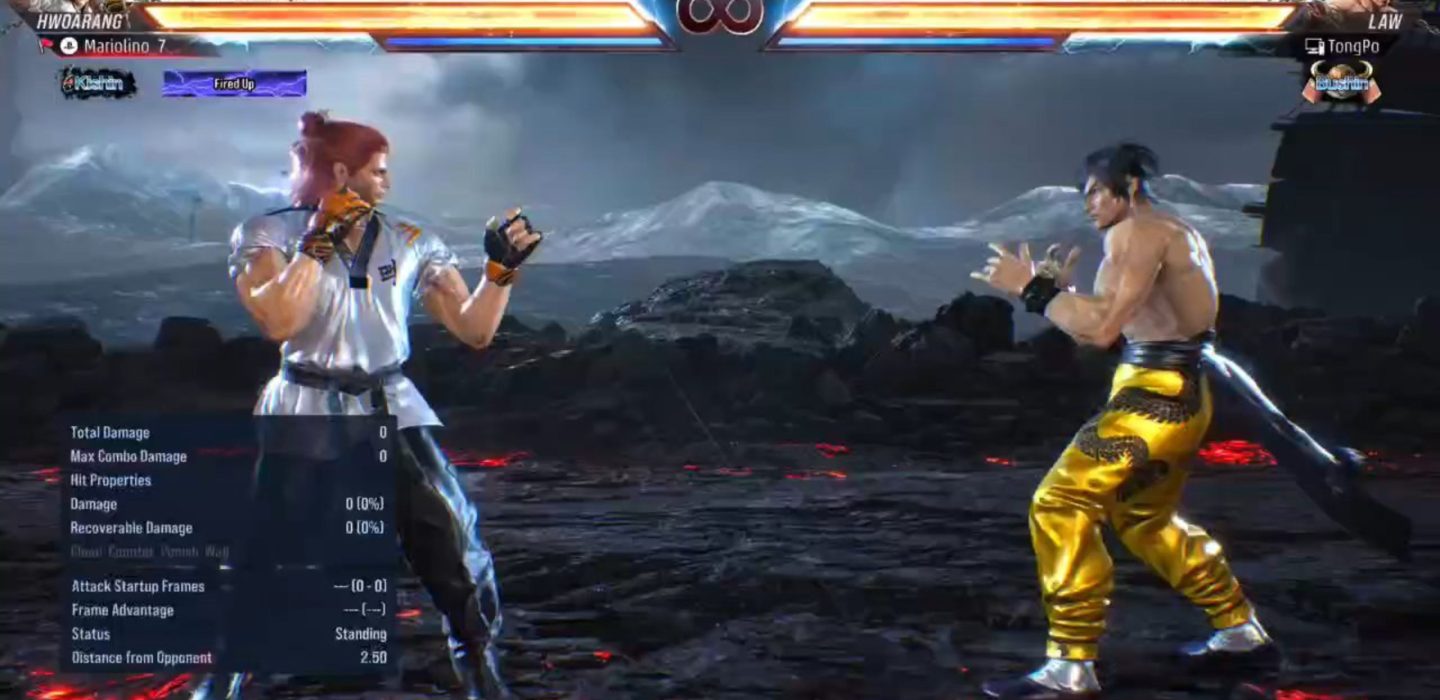
In Tekken 8, the attack isn’t just about rushing in: it’s an art made of reads, rhythm, and calculated choices. A good player knows when to strike, when to wait, and how to force the opponent into making mistakes. Let’s explore the main tools to apply pressure, break defenses, and stay in control of the match.
Main Types of Attacks
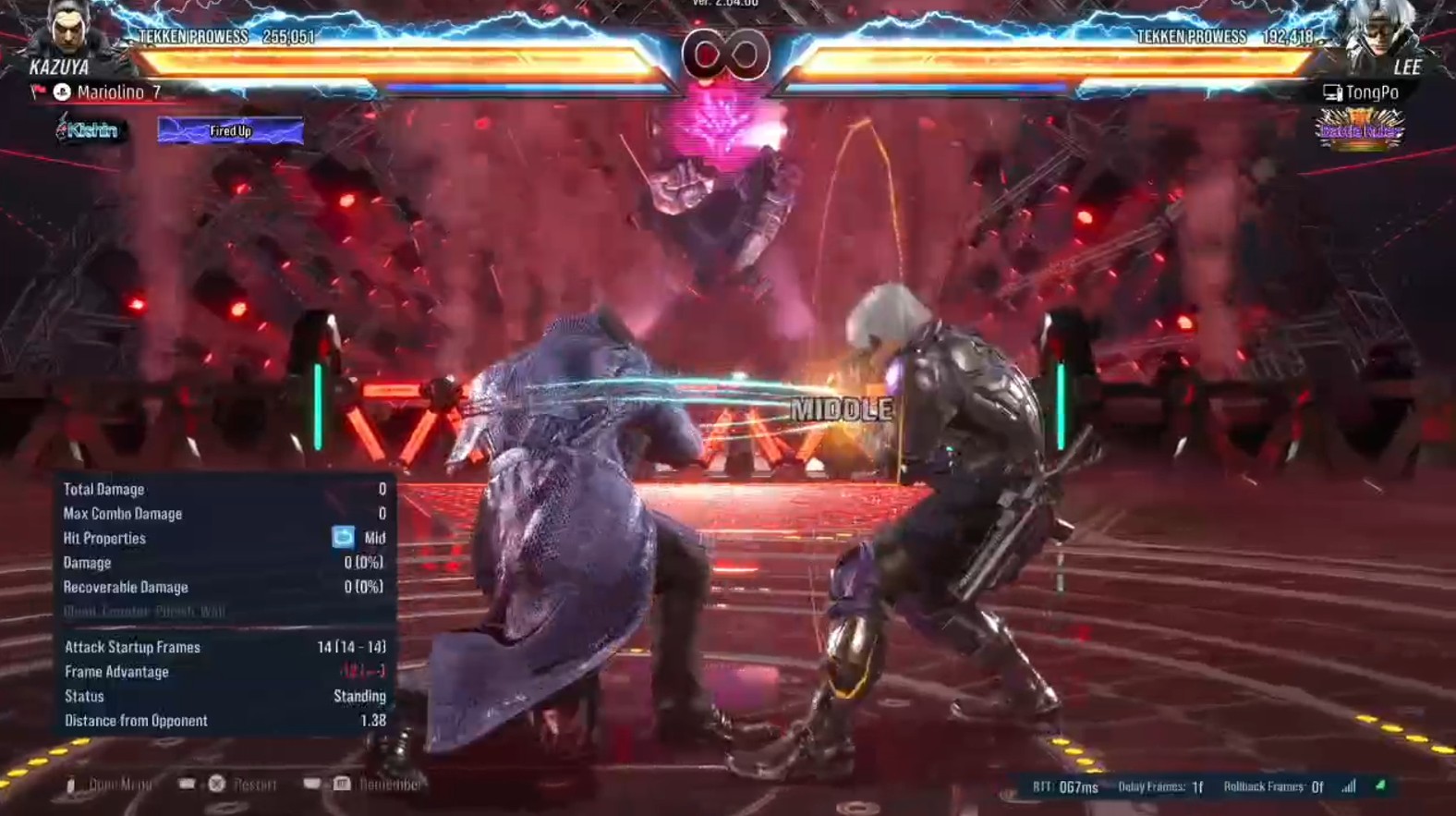
In Tekken, every attack follows one of three height levels, which are visually indicated in training mode. Let’s break them down:
High Attacks
High attacks hit the upper part of the body and can be avoided by crouching. They’re useful to keep opponents at bay or for quick strikes.
Mid Attacks
Mid attacks hit the torso. They cannot be avoided by crouching and must be blocked standing. They’re ideal for punishing players who crouch too often.
Low Attacks
Low attacks hit the legs or feet. They can be evaded by jumping or blocked only while crouching. Perfect to break an opponent’s guard.
Each move aligns with one of these heights, but not all moves behave the same. For example, some low attacks won’t connect against grounded opponents, while certain mids can.
Secondary Types of Attacks
Special Mid
These appear to be mids but can be blocked both standing and crouching. They’re usually special attacks like projectiles or magic. One of the most well-known special mids is the Crouch Jab (also known as Dick Jab – d1 / db1).
Unblockables
These can belong to any height category but cannot be blocked. Typically slow or flashy, they must be dodged with a sidestep or by moving away.
Throws
Throws are close-range attacks that cannot be blocked, but they can be broken or avoided by crouching ⬇️ (note: some throws are mids, so crouching doesn’t always help). They’re effective against very defensive opponents.

Pushback and Spacing
Pushback refers to the distance created after an attack is blocked or lands. Some moves push the opponent far back, while others leave you up close.
Why Does It Matter?
Understanding how much pushback a move causes helps control the pace of the match and disrupts your opponent’s distance perception.
What Is Spacing?
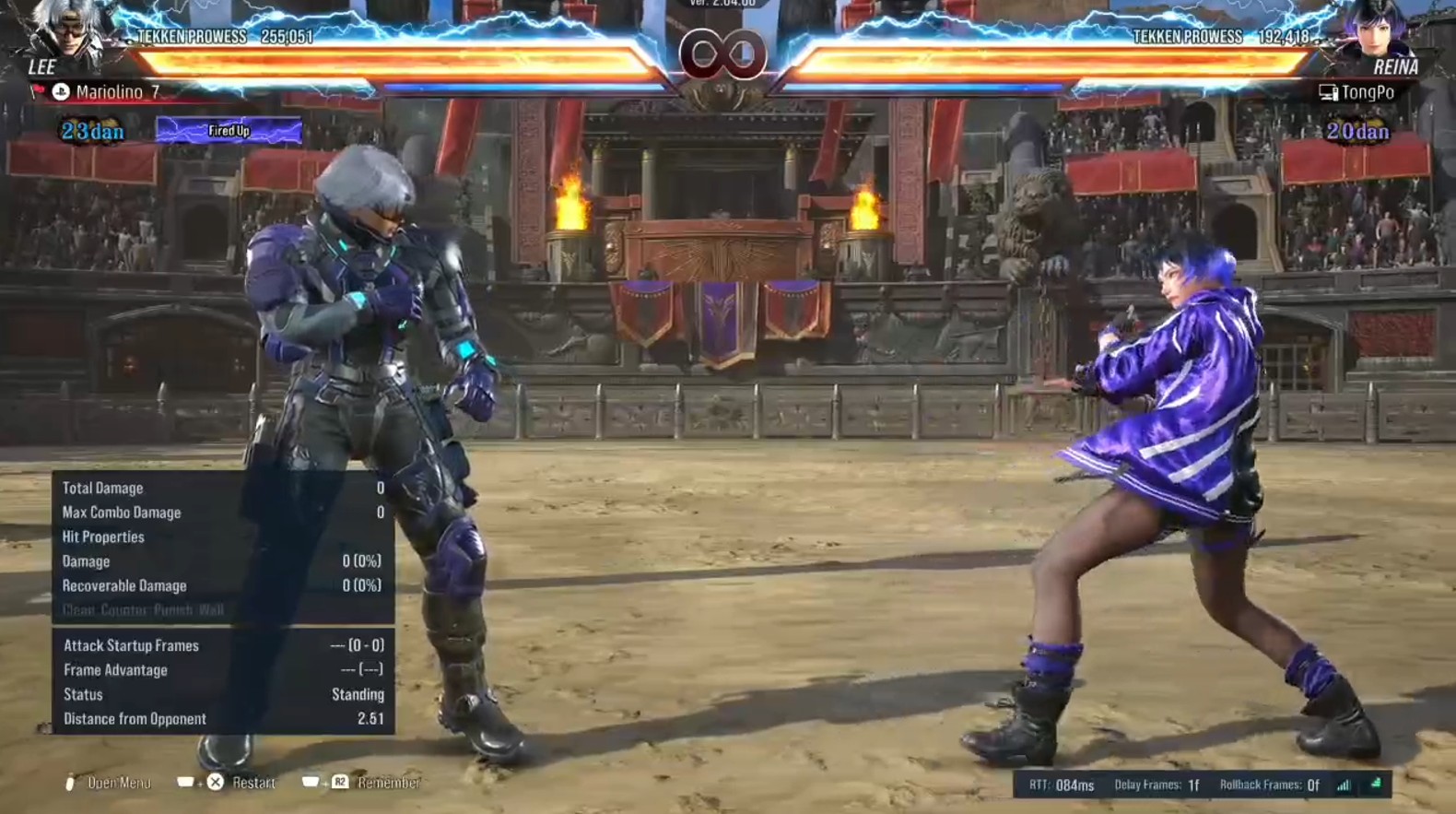
Spacing is the art of managing distance between you and your opponent during combat. It’s key to neutral game, where you move with purpose to:
- Stay out of reach from dangerous attacks
- Be at the ideal range for your most effective moves
- Hit the opponent’s who misses his hits (Punish whiffs)
Why Master Spacing?
- Reading the opponent: Know how far you must stay to avoid specific attacks, so you can stay out of their reach.
- Playing safe: Some moves are punishable up close but safe if they have good pushback.
- Baiting errors: Staying just out of range may tempt opponents into whiffing.
- Controlling match flow: You decide when to engage, retreat , or strike .
Spacing isn’t just movement
It’s knowing where to be and why. Apply pressure without risk, and strike when your opponent opens up. Whether you play safe or make a read, it’s all part of a solid plan.
Frame Windows and Punishment
Tekken is locked by design at 60 FPS. Each frame = 1/60th of a second. Every move is made up of:
- Startup frames: How many frames before the move becomes active
- Active frames: How many frames the attack uses to hit
- Recovery frames: Frames after the move ends needed by your character to recover (if it whiffs, it’s called Whiff Recovery)
Understanding Startup Frames
Think of frames like thermometer readings. Neutral is “0”. The more negative (shown as “-”), the more disadvantage you’re at after a move. The more positive (“+”), the more advantage you gain.
Recovery frames always leave you vulnerable. However, some moves recover quickly and are harder to punish on whiff.
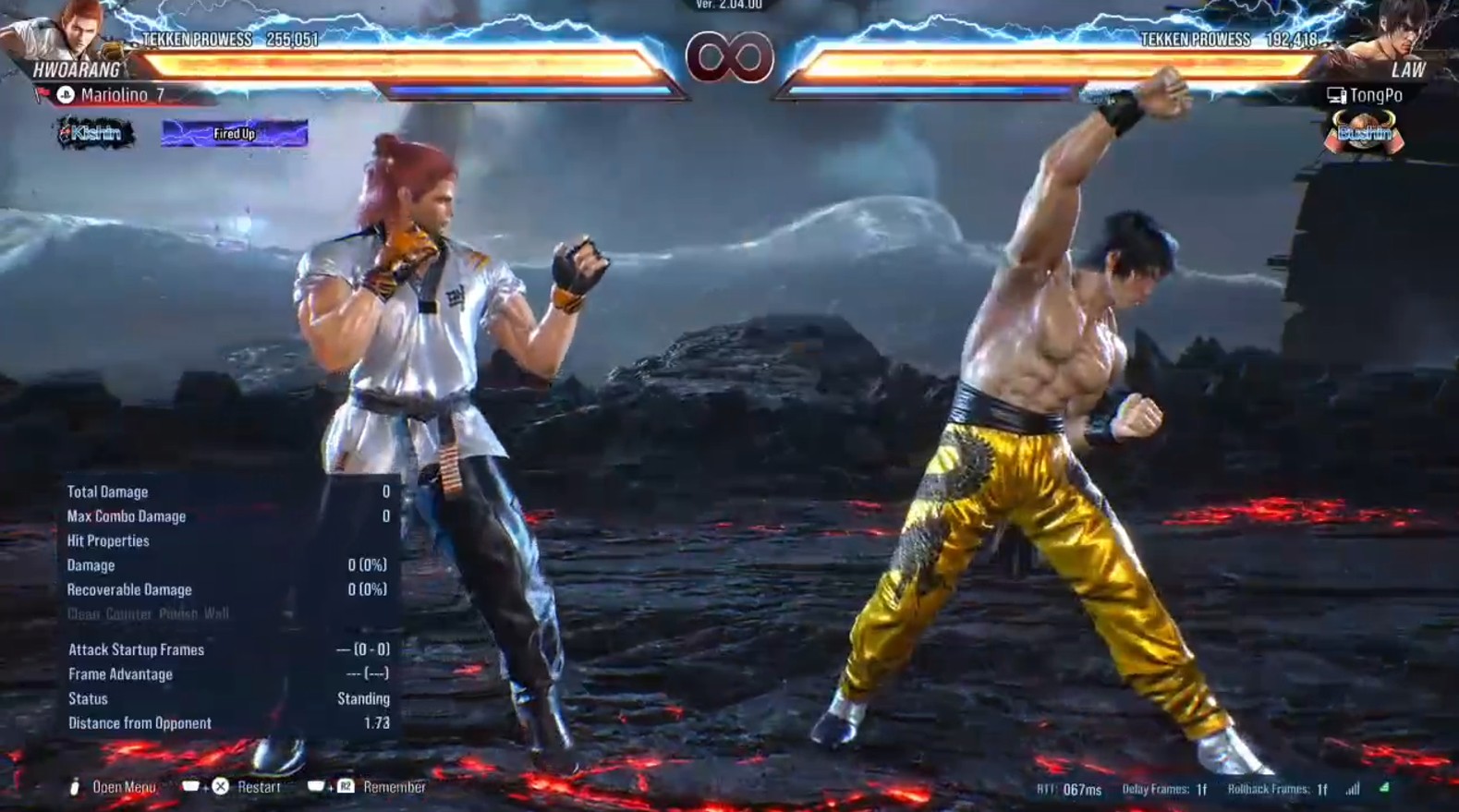
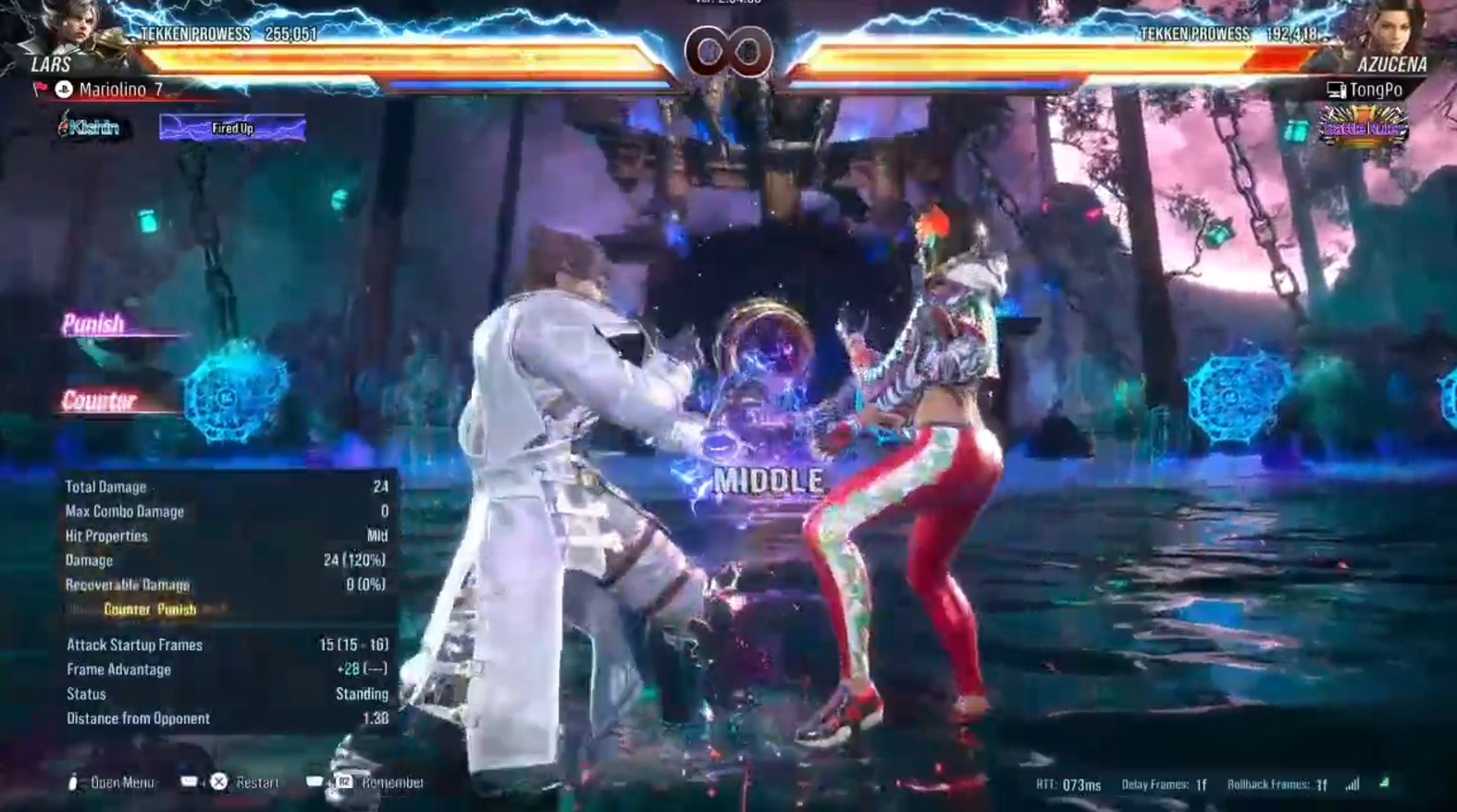
Tekken provides a detailed frame window display, showing distance, state, and frame data. However, it doesn’t distinguish startup and active frames: it shows the first attackable frame.
For example, a Jab (notated as “1”) has 9 startup frames and hits on the 10th frame. So, the game lists it as 10f.
Each move grants advantage or disadvantage depending on whether it lands (on hit) or is blocked (on block). Take the Jab again:
- Jab – 1
- On Block: +1
- On Hit: +8
If your Jab is blocked, your next move is sped up by 1 frame, that will then subtracted from its startup.
Example Situation
- Player A throws 1 On block
- Player A throws another 1
- Player B also throws 1 after blocking
Result: A wins the exchange. Why? A’s second Jab now starts in 9f, faster than B’s 10f Jab. Since 9 < 10, A lands the hit first.
Punishment
To punish in Tekken means responding to an opponent’s mistake with a guaranteed hit before they can defend. It happens during their recovery frames.
There are two types of punishes:
- On block: Opponent uses a move with high disadvantage (e.g., -10 or more), you can still hit him while he’s in recovery. Some moves may be +1 on block, but there are others that on block can be even -9.
- On whiff: Opponent misses an attack, leaving them open for you to hit them during recovery.
If an opponent is at -10, and your Jab is 10f, they can’t block in time. You can use the +8 on hit to your advantage.
Why Punish are a fundamental part of the game. They:
✅ Maximize damage: Don’t just block, strike back!
✅ Limit opponent’s choices: Force hesitation if you always punish he’ll be afraid to launch an attack.
✅ Gain mental and technical edge during balanced matches.
✅ Finish rounds faster by spotting opportunities.
Poking
Poking is the art of using fast, safe, low-risk attacks to slowly chip away at your opponent’s health or to provoke mistakes.
Think of pokes as annoying little stings. They don’t hurt much, but they:
- Keep the pressure on
- Prevent opponent from safe approaching
- Disrupt his comfort zones
- Set up sidesteps opportunities
Common Pokes in Tekken
- Jab (1) – 10f, very safe and quick
- Low kicks (e.g., d+4) – Annoying and punishable (they are slow), but useful
- df+1 – A versatile mid used by many characters, good for spacing and for mind games
Pokes aren’t for big damage. They help maintain pressure and shut down your opponent’s game.
Check
A check is a fast, safe move used not to deal damage, but to see what the opponent is doing. Think of it like a kind of probing action, to “test” his reactions, limit his options or read his intentions.
It limits their choices, helps you read behavior, and adds control.
Example:
Imagine you throw a Jab (1) when unsure of your opponent’s plan:
- If he tries to attack, you interrupt
- If he does nothing, you created pressure
- If he moves, you stop him
- If he blocks, Jab is safe anyway so you don’t risk much.
Check vs Poke: What’s the Difference?
In Tekken (and fighting games in general), pokes and checks look similar but serve different purposes:
- Poke: Wears down health bar, applies pressure.
- Check: Tests opponent reactions, gathers intel. A tool to read and control the match.
“I throw this move… what do you do? Move? Attack? Freeze? Do you know how to counter this?”
Can a Move Be Both a Poke and a Check?
Yes. It depends on how you use it, since context is everything.
A Jab for example can be both:
A check if you’re testing his reactions
A poke if you’re chipping away slowly at your opponent’s health and