
Tekken 8 Combo System: All that you need to know

There are several core combo systems that form the basis of every fighting game, but first of all: what is a combo? A combo (short for “combination”) is a series of attacks connected one after another without giving the opponent a chance to defend between hits.
In practice, it’s when you manage to start a sequence of moves that strike the opponent continuously, without them being able to react or block. A combo is one of the most essential elements in fighting games because it helps maintain pressure on the opponent, gives you a “certainty” about the damage you’ll deal, and can be optimized in several ways.
Let’s start by breaking down the different types of combos.
Types of Combo
1. Stun Combo
What it is: A combo that takes advantage of the opponent’s “stun” state.
How it works: After an attack leaves the opponent stunned (frozen or unable to react), you can chain a series of hits while they’re defenseless.
2. Link Combo
What it is: A chain of attacks that requires precise timing between each hit.
How it works: Each hit must be executed right after the previous one finishes or connects, but without blending the animations (these aren’t “automatic” combos).
Difficulty: It takes practice to master the correct rhythm because if you mistime it, the combo breaks.
3. Juggle Combo
Definition: A combo where the opponent is launched into the air and you keep hitting them while they’re airborne.
How it works: After a launcher hits and sends the opponent airborne, you can follow up with aerial hits to maximize damage.
Importance: It’s one of the most spectacular and effective techniques to deal big damage.
Why is knowing these combo types important?
- It allows you to maximize damage once you’ve broken through the opponent’s guard.
- It helps you understand which combos are easier or harder based on your skill level.
- It lets you adapt your playstyle to different situations: punishing mistakes, continuing pressure, or closing out a round.
Tekken mainly uses:
🔹 Juggle Combo:
The core of Tekken’s combo system revolves around juggle combos: launching the opponent into the air and striking them while airborne.
It’s the backbone of combat: every character typically has a launcher ➡ combo ➡ Tornado ➡ combo ender sequence.
🔹 Link Combo:
These exist in a limited form but aren’t central to gameplay.
Some attacks must be performed with precise timing and aren’t automatic strings, especially in advanced combos or post-wall splat situations.
But Tekken is not like Street Fighter, where link mechanics are foundational.
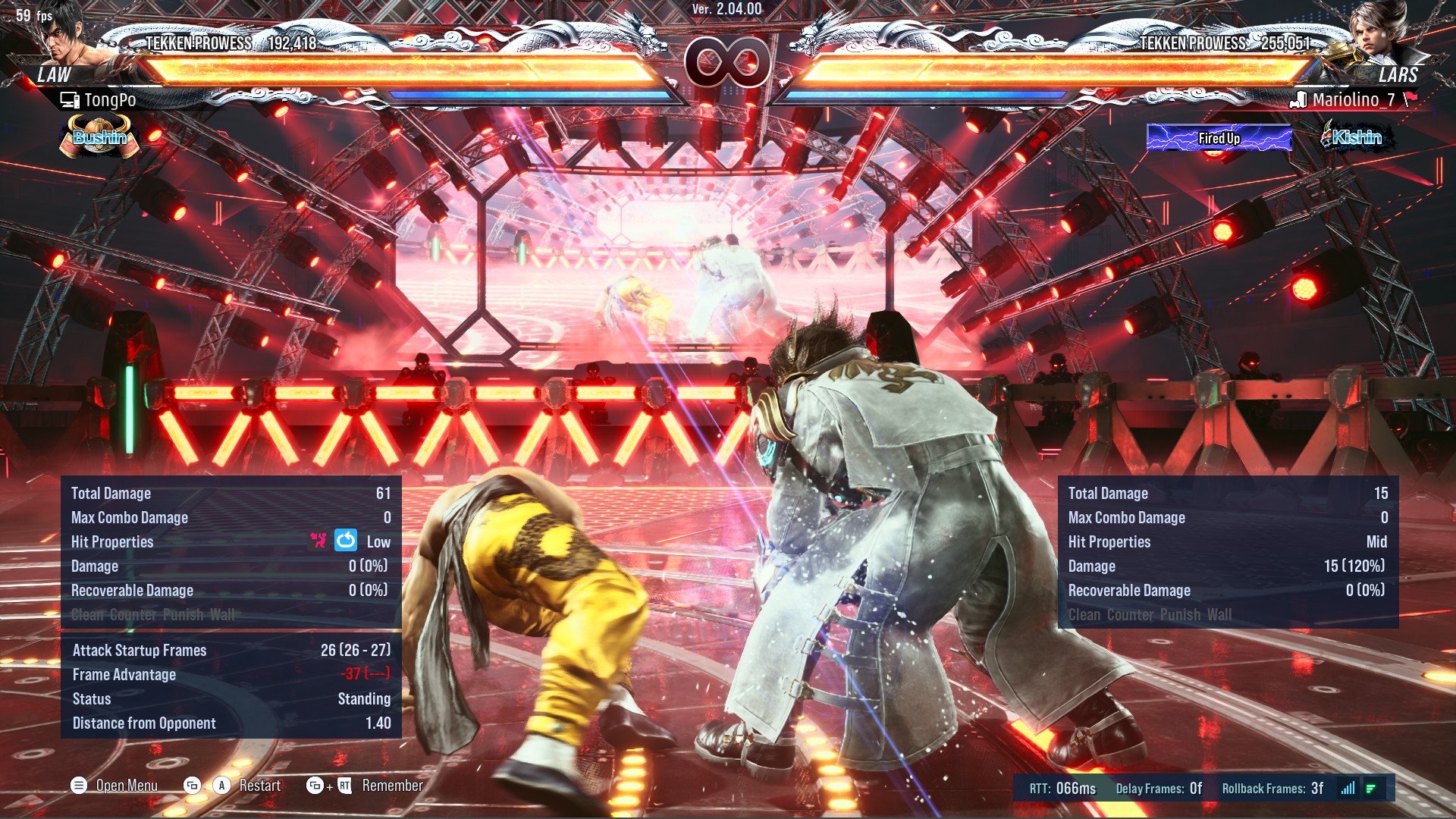
How does a combo work?
At its core, the combo system uses a Scaling System.
Scaling is a mechanic that progressively reduces the damage of hits within a combo. The longer the combo, the less damage each following hit deals.
Why does scaling exist?
- To prevent infinitely strong combos.
- To encourage creativity in building optimized combos.
- Because not all moves are equally balanced: the same move may do more damage outside of a combo than when placed deep into one.
And in Tekken?
In Tekken 8 (as in previous entries), combo damage scales by precise rules:
- Every hit in a combo deals slightly less damage than the previous one.
Example:
- 1st hit: 100% damage
- 2nd hit: ~80%
- 3rd hit: ~70%
- 4th hit: ~60%
- …down to as little as 5%-10% for the final hits
“Tornado” moves, Heat Dash, or the final hit of a wall combo have unique scaling.
Some moves, if used mid- or late-combo, scale even harder. Example: A Heat Smash used at the start deals much more damage than one used after 7 hits.
🔸 Initial launchers always start with true damage (full 100%).
🔸 Combos starting from a Heat Engager have higher initial scaling if they begin during Heat.
🔸 The final hit always deals at least 1 damage, even with maximum scaling.
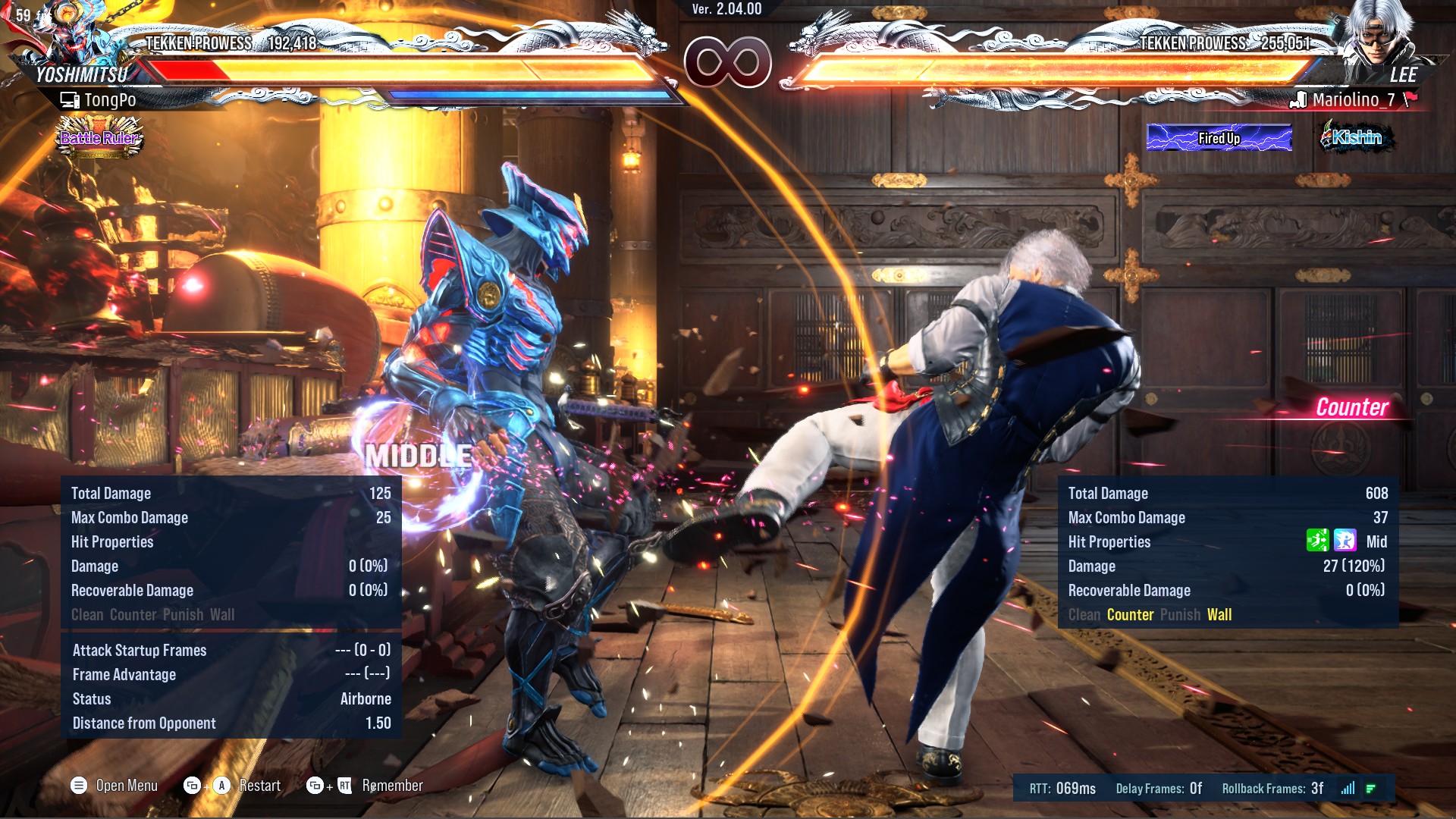
Structure of a Tekken Combo
1) Starter / Launcher
The move that puts your opponent into a vulnerable state.
2) Follow-up (Ground or Aerial Combo)
Comes after the starter and includes moves that keep the enemy airborne.
3) Tornado Flip (Combo Extension)
A move that spins the opponent in the air and lets you continue the combo.
4) Heat Burst (Outside Heat)
Slams the opponent upside down, extending your combo and activating Heat for your character.
5) Heat Dash / Heat Smash (During Heat)
If you’re in Heat State, you can:
- Use a Heat Dash after a Heat Engager to extend the combo
- Use a Heat Dash after a Heat Burst to connect guaranteed damage
- Use a Heat Smash to break walls or trigger environmental events
6) Ender (Finisher)
Used to maximize final damage, gain positional advantage, or often both.
7) Okizeme (Post-Combo Situation)
After the opponent hits the ground, you have time to:
- Keep the pressure
- Get ready to defend
- Start a mind game
An effective combo in Tekken 8 isn’t just about damage, it’s about scaling management, final positioning, and post-combo pressure. Knowing the structure lets you optimize every piece of your offensive game.
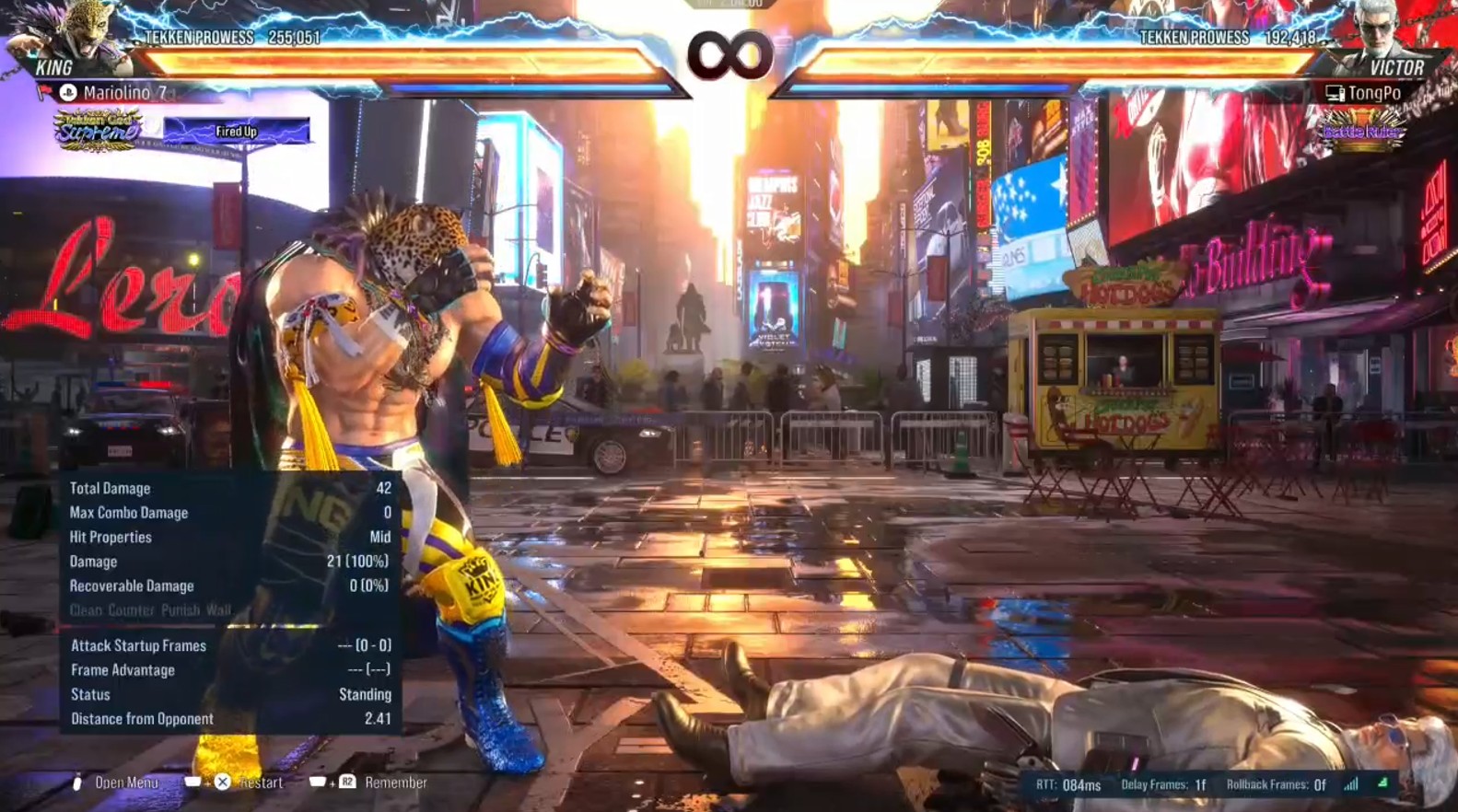
Wall Combo
A Wall Combo is a follow-up combo executed after launching the opponent into a wall. When a character hits the wall, they bounce off (wall splat), becoming temporarily frozen and vulnerable. That’s when you can unleash a bonus combo using the wall’s proximity.
Typical Wall Combo Structure
🔸 Wall Splat (Wall Impact)
Triggered by launching the opponent toward the wall via a combo.
🔸 Filler / Follow-Up
Often a single move or quick string that keeps the opponent stuck to the wall.
🔸 Combo Ender
A move that closes out the wall combo.
It must deal good damage and ideally leave you at an advantage — or knock the opponent down.
The Wall System is complex and full of unique interactions caused by different types of splats. However, there are two main scenarios:
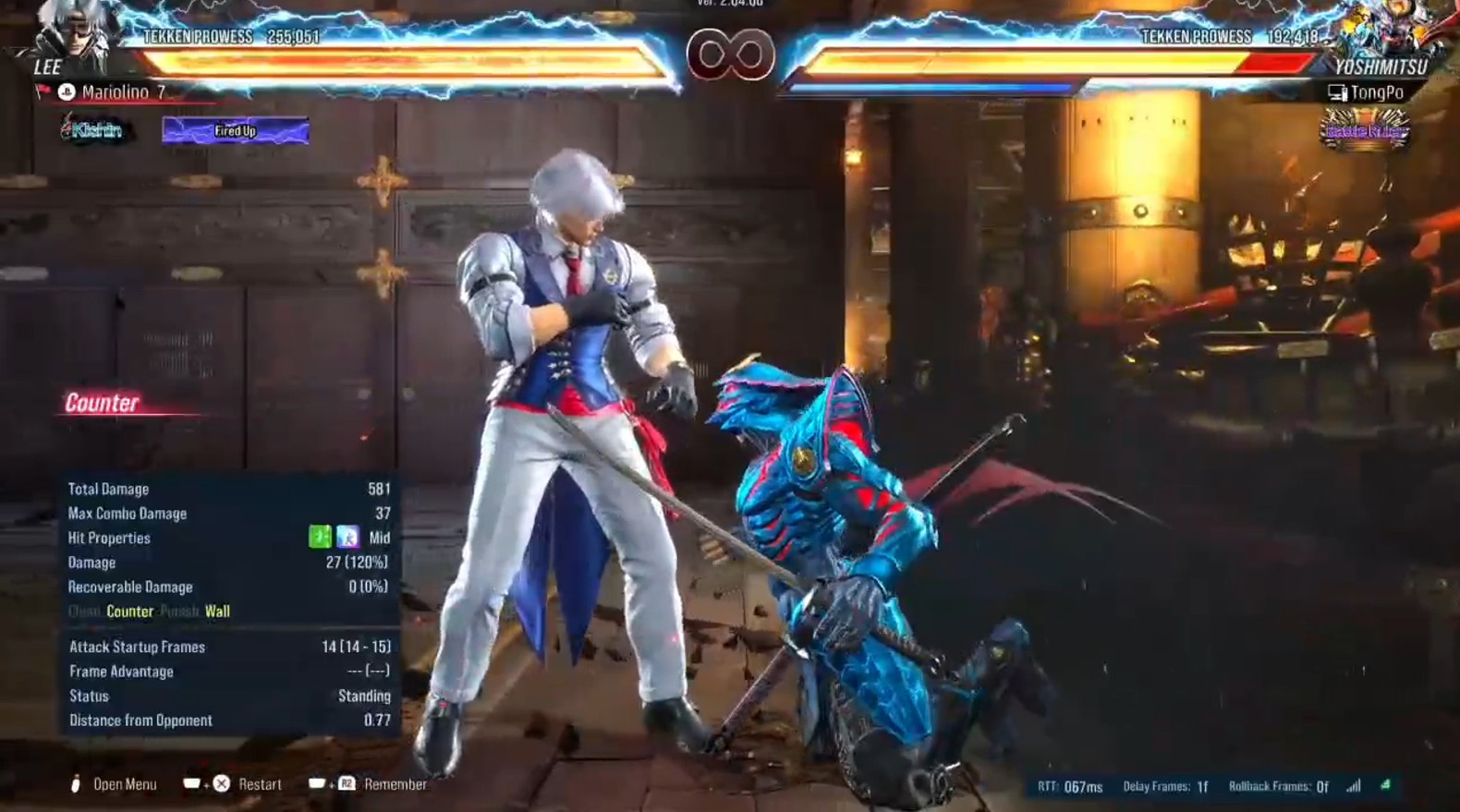
1. Hard Wall Splat (Classic)
Occurs when the opponent is stunned against the wall outside of a combo, therefore in “neutral.” The opponent falls slowly toward you, peeling off the wall. This allows a full wall combo, potentially with a tornado or a re-splat.
2. Wall Slump
This unofficial term (coined by the community) describes a wall splat caused by an aerial combo. The difference is that the opponent falls faster and “sits down” instead of sliding off the wall.
When you strike the opponent just as they “sit,” that hit will always deal 50% scaled damage. For this reason, players usually opt for a heavy-hitting mid attack in this scenario.
3. Wall Spike
A Wall Spike is a wall combo state where the opponent is grounded in a way that prevents tech rolling, leaving them open to a guaranteed follow-up.