Archetypes in Fighting Games are More Important than you would Suspect

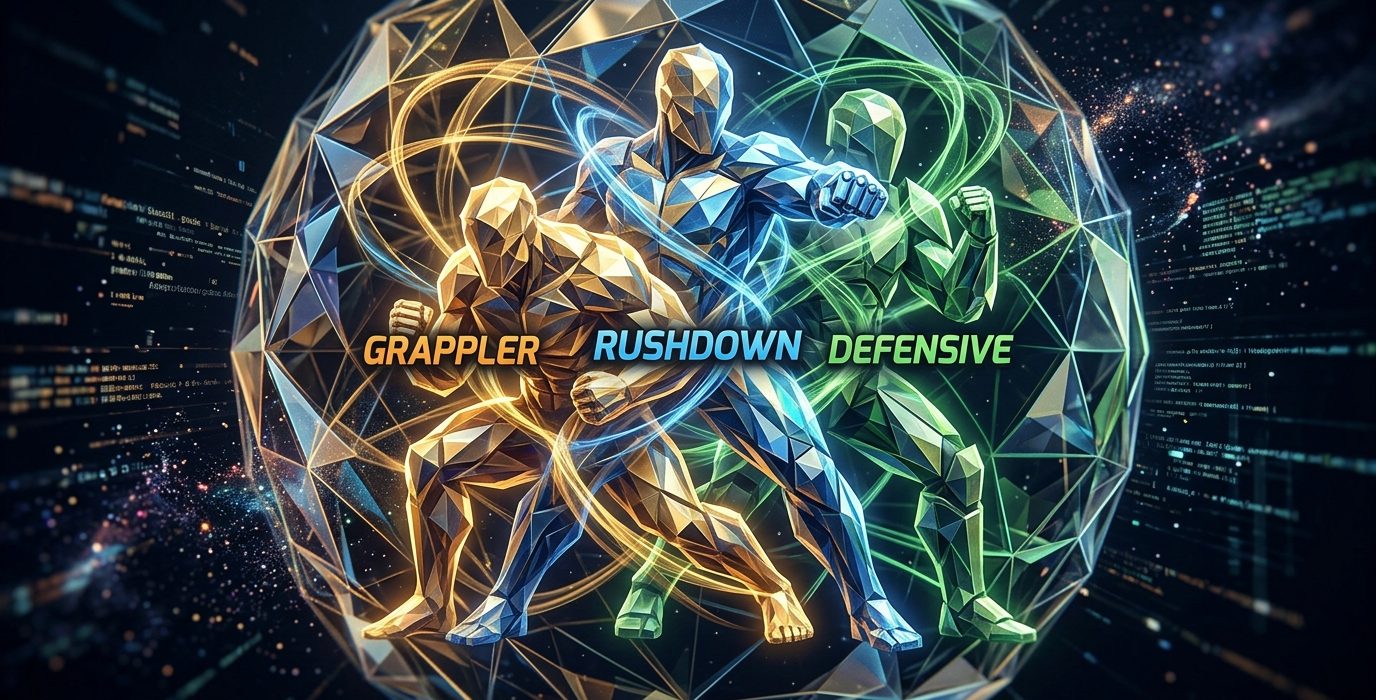
What are archetypes in fighting games?
An archetype is a character template with well-defined gameplay traits representing a recognizable and recurring combat style within the genre. It serves to classify characters by their strategic approach: some rely on raw power, others on speed, others on controlling space, and so on.
In practice, an archetype is like a “style category”, useful for navigating the game and picking the character that best fits your playstyle.
A brief history
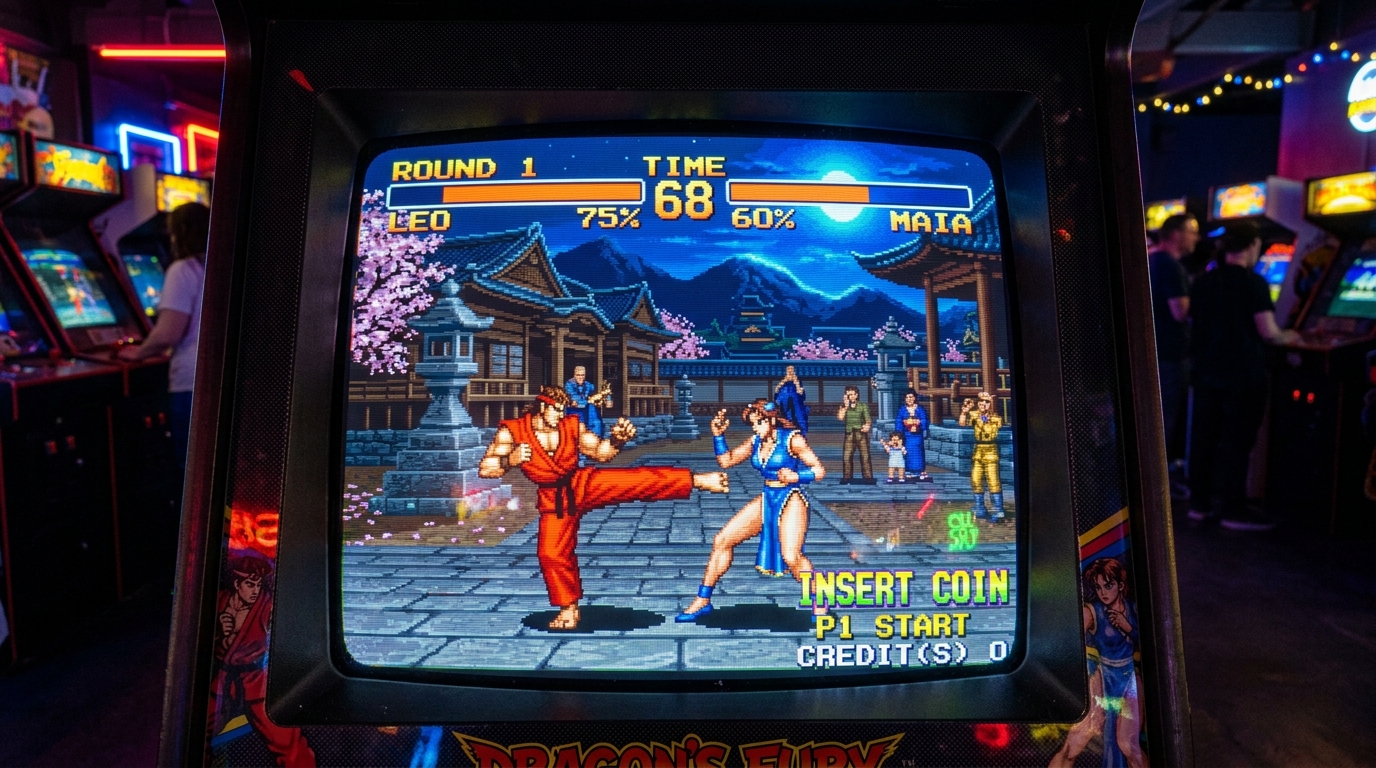
Fighting game archetypes emerged in the ‘80‑’s and ‘90s with games like Karate Champ, Street Fighter and Yie Ar Kung-Fu. They defined how we read characters: balance strategy strengths and weaknesses. To this day they remain a useful tool for picking the right character and building a consistent competitive playstyle.
Why are they still useful today?
- Style clarity: Understanding your archetype helps you pick a character that matches your playstyle (balanced defensive aggressive…).
- Tactical framework: You know what to expect: a grappler wants to get in close a zoner fears your approach…
- Mental approach: Teaches you what to prioritize when learning the character: projectiles, throw mix‑up and range control. (Note: this is best explored after you have a grasp of Tekken’s fundamentals.)
- Community and competitive play: A shared understanding of archetypes makes it easier to develop strategies mix‑up and countermeasures.
- Game evolution: Even in Tekken 8 as in every other fighting game these archetypes persist.
Archetypes:
Shoto / All‑rounder
- Origin: Originated in Street Fighter (1991) with Ryu and Ken as the first representatives of the Shotokan style.
- Utility: Well-rounded characters ideal for beginners: they cover space effectively and support a variety of setups and approaches offering a solid starting point for learning the fundamentals of the genre.
Grappler
- Origin: Introduced with Zangief in Street Fighter II (1991) a slow character but devastating up close.
- Utility: Require excellent range control and matchup knowledge. Once they get in they can deal devastating damage through command grabs.
Zoner
- Origin: Born with characters like Guile and Dhalsim in Street Fighter II (1991). They use projectiles and long-range attacks to control space.
- Utility: Excellent at maintaining their lead and punishing reckless approaches. They force the opponent into a defensive game leveraging their superiority at mid and long range.
Rush‑down / Aggressive
- Origin: Found in characters like Cammy (Street Fighter) Liu Kang (Mortal Kombat) and other pressure-oriented characters.
- Utility: Require creativity and fast decision-making: close-range attacks constant mix‑up pressure. Ideal for players who prefer a fast-paced offensive style.
As games have evolved and characters have grown more complex there has been a growing need to recognize finer sub-categories to better describe what each character actually does and how they are played.
Some examples of sub-archetypes
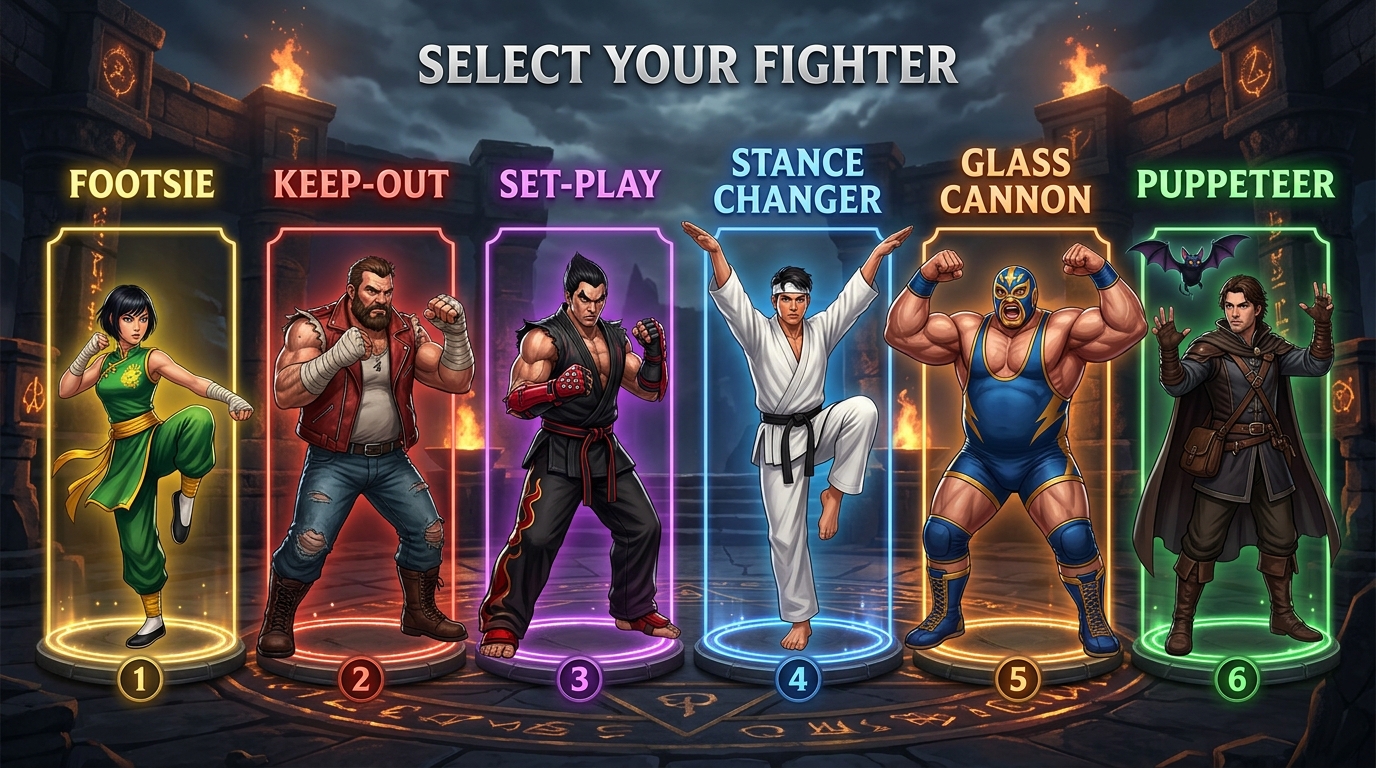
Here are some sub-archetypes that have emerged each belonging to broader categories:
- Footsie / Whiff Punish:
Characters who control space with simple attacks and punish opponent mistakes. - Keep-out / Counter-Zoner:
Specialized in space control through mid-range pokes and punish responses. - Set-play / Vortex:
Characters built around complex mix-ups resets and constant pressure on block. A classic example is HellSweep by Kazuya. - Stance Changer / Stance Character
Characters that switch stances or manage multiple mechanics. - Glass Cannon:
characters with extremely high risk and equally high reward. - Puppeteer
a character that controls a secondary entity to split pressure across multiple attack sources. - Summoner
Similar to the Puppeteer but instead of controlling it directly this character summons entities or external attacks to act on their behalf or alongside them without direct control over the summoned entity.
Why are sub-archetypes useful?
- Descriptive precision: better distinguishes characters that seem similar but fill different roles.
- Improves competitive play: knowing that your Rushdown leans more toward a Poke Rushdown or a Pressure Rushdown helps you prepare more effectively for a match.
- Character selection guide: helps you find the character that best suits your approach to the game.
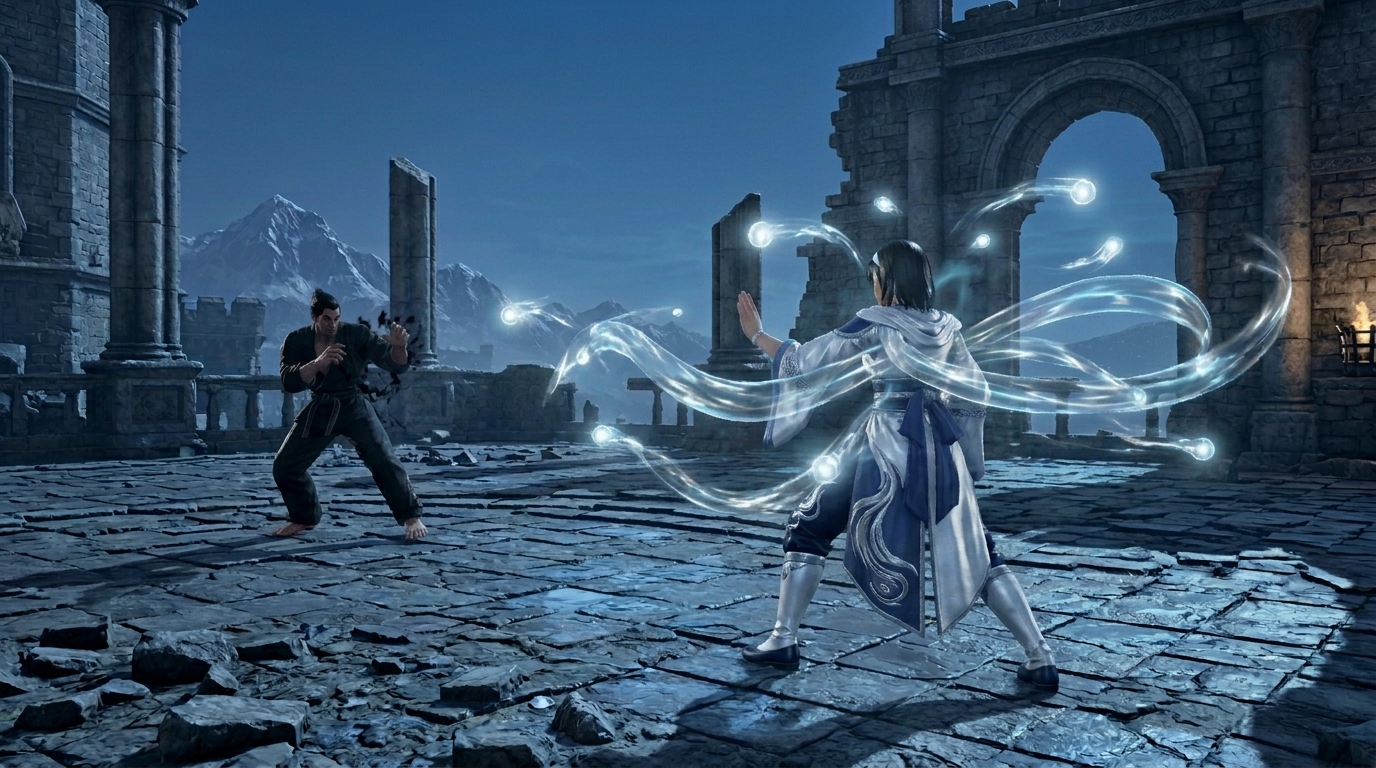
That said
When it comes to Tekken, however, the discussion gets considerably more complex.
In 3D fighting games like Tekken talking about rigid archetypes is far harder than in traditional 2D games (Street Fighter Guilty Gear etc.).
Why is it hard to define archetypes in Tekken?
- Every character has an enormous moveset
- We are talking about 80 to 150 moves per character, covering fast attacks, launchers, mix-ups, stances and much more.
- Characters are often “hybrids”
- For example, Hwoarang, in previous entries was a Mix-up Stance based Rushdown, while his mentor Baek was a Feint Stance Based Rush Down. In Tekken 8, Baek is absent, but many of his moves were inherited by Hwoarang. As a result, Hwoarang no longer has a primary archetype with a secondary one — he has two full primary archetypes (Mix-Up Rushdown and Feint Rushdown), on top of being a Stance Character.
- Dragunov plays Pressure (offensive role), but also boasts excellent punishes (defensive role)
- Freedom of movement and approach
- In Tekken you can shape your own style: the same character can be played aggressively or defensively poke-based, and so on, depending entirely on the player.
- No fixed roles or predetermined “kits”
- In many 2D fighting games, characters are often built around a central idea, whereas Tekken operates more like an open system.
That said, every character still has a core that draws from an archetype. And it is an archetype that is not rigid but rather general
“a character has a lot of grabs in their kit, they wrestle, so they’re a grappler: grapplers are slow but have great range, and if they grab you, they hit hard”.
But a Tekken grappler bears no real resemblance to how Zangief plays in Street Fighter: they do not excel at counter moves or poking, but they are considerably faster than their Street Fighter counterpart and can be played in a far more versatile way, so much so that grabs often end up taking a back seat.
In short, Tekken does not constrain even through its archetypes the player’s playstyle; instead, it informs the player and invites them to understand that a given character might not work exactly that way.