
Arcade Stick, Controller, or Leverless? You can choose how to fight

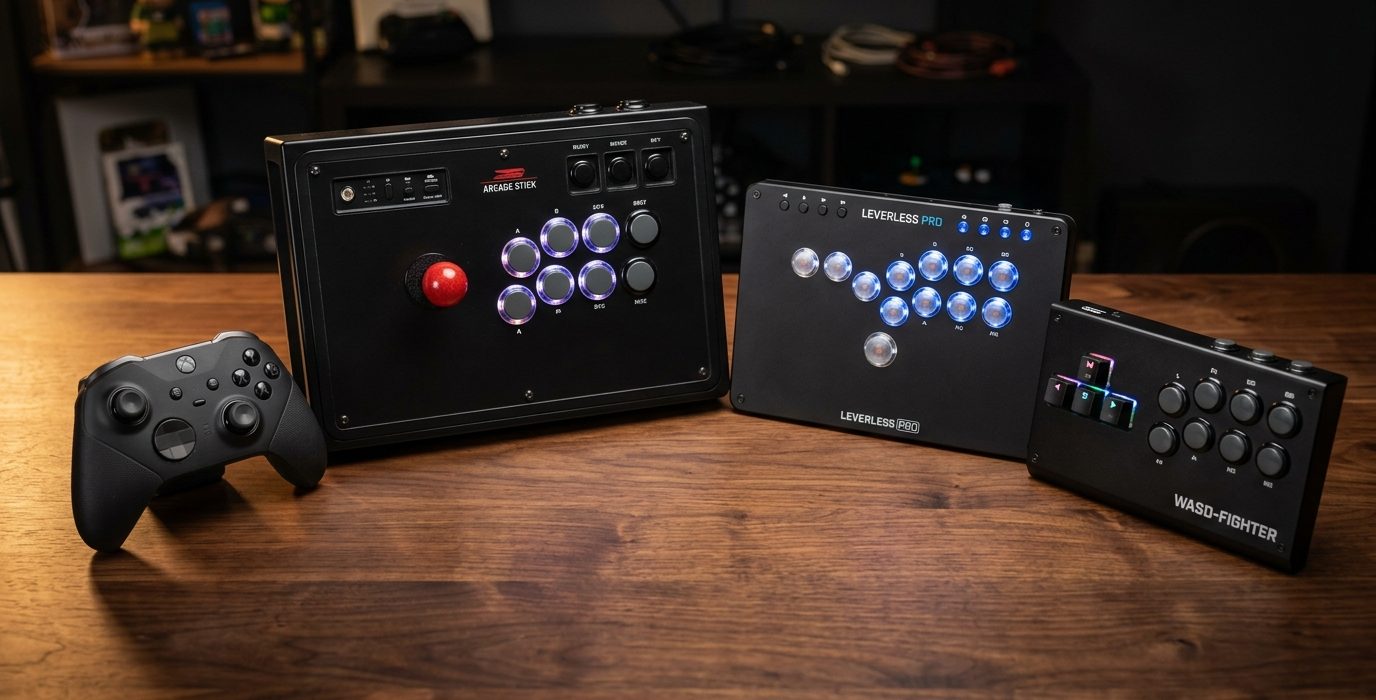
Choosing the right controller for fighting games isn’t just a matter of personal taste: at a certain level it turns to a strategic decision, as each device has specific characteristics that can make a real difference in tournament play.
The Pad: Comfort From Day One
The traditional controller is the most widely used input device. Most players take their first steps in titles like Tekken 8 on a pad, drawn in by its familiarity and ease of use.
With a pad, everything is within thumb’s reach: face buttons can be pressed quickly and the shoulder triggers let you map more complex combinations. It’s the natural starting point for anyone who wants to jump in without dealing with the learning curve of an arcade stick.
One of the go-to options in this category is the Hori Fighting Commander OCTA (Ed OCTA Pro) This controller is designed specifically for fighting games: it moves R1 and R2 to the front panel alongside the four standard face buttons, replicating the layout of an arcade cabinet.
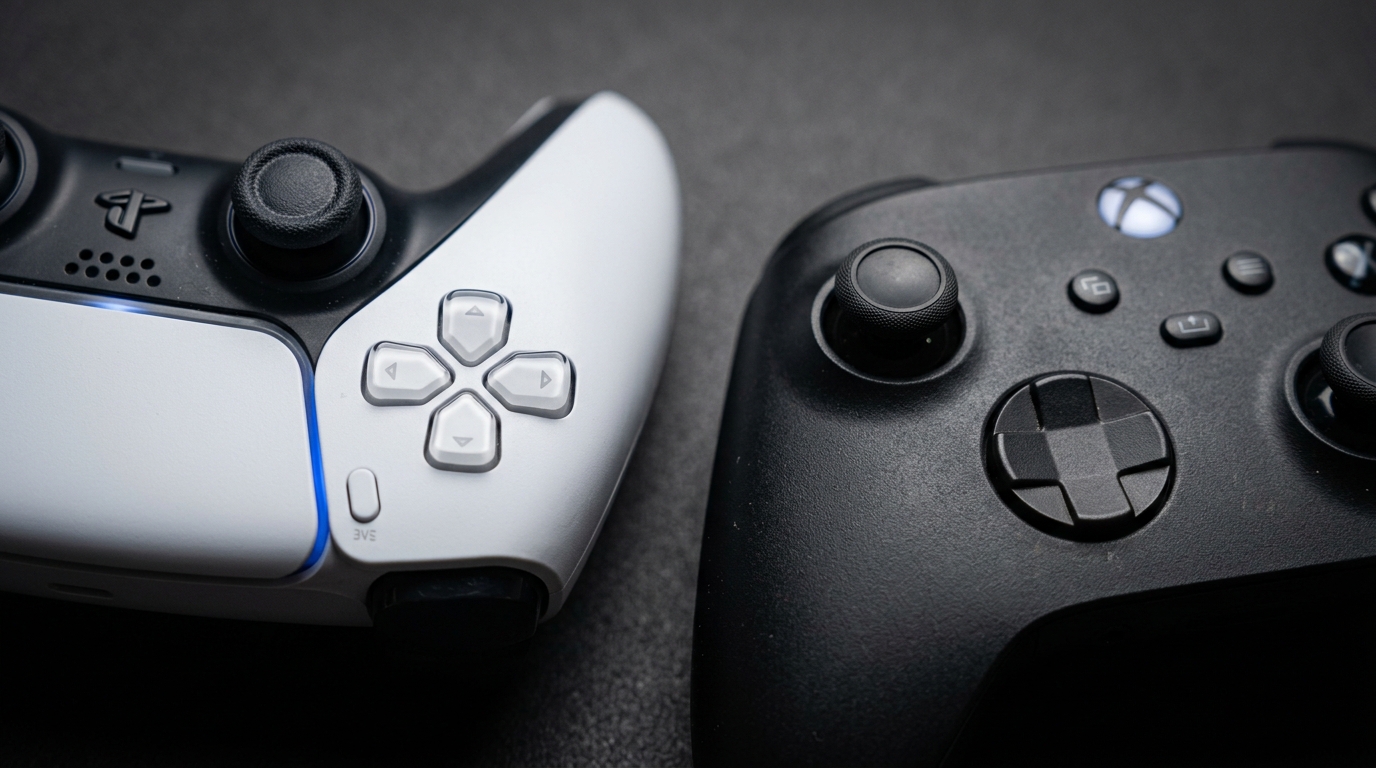
Pad preferences remain subjective, though. Many players find the PS5’s d-pad too spread out for fast directional transitions, and tend to prefer the circular, concave d-pad on Xbox Series X/S, which makes hitting diagonals more reliable.
Arcade Stick: Back to the Roots
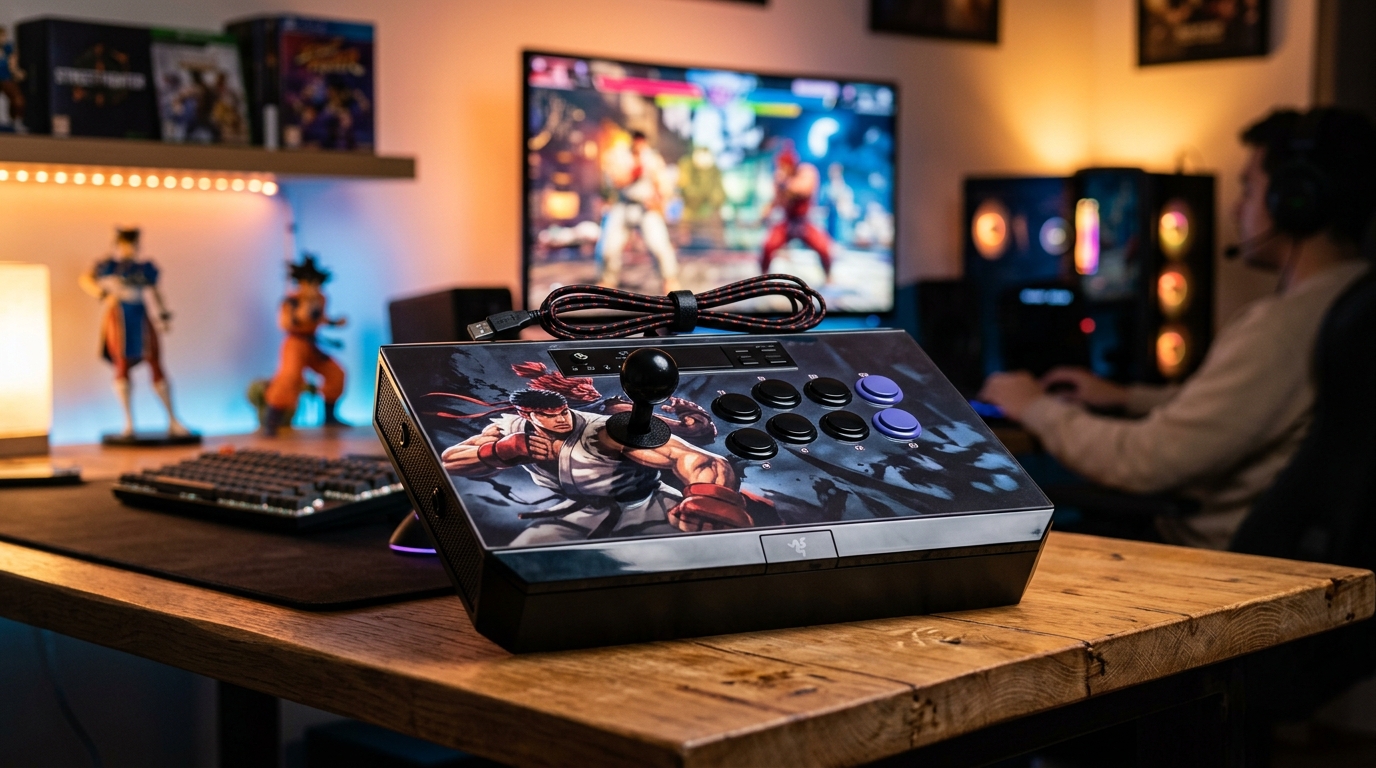
For many enthusiasts, the classic joystick is the very soul of the genre. Born in arcades, the stick offers a spacious six or eight button layout and a physical lever that builds a kind of muscle memory you just can’t replicate on anything else.
Compared to a traditional controller, an arcade stick reduces finger fatigue by spreading the effort across the entire hand and wrist. It’s the right tool for anyone who wants maximum precision on complex motions, like the Korean Backdash in Tekken.
The top reference in this category is the PDP Victrix Pro FS. The shell is a single-piece aerospace aluminum chassis, ergonomically shaped to avoid wrist strain, with a bottom panel that gives quick access to internal components. It ships with Sanwa Denshi parts and is a favorite among pro players who travel frequently, thanks to a detachable lever that prevents damage in transit.
The Art of Modding: Optimizing Your Hardware
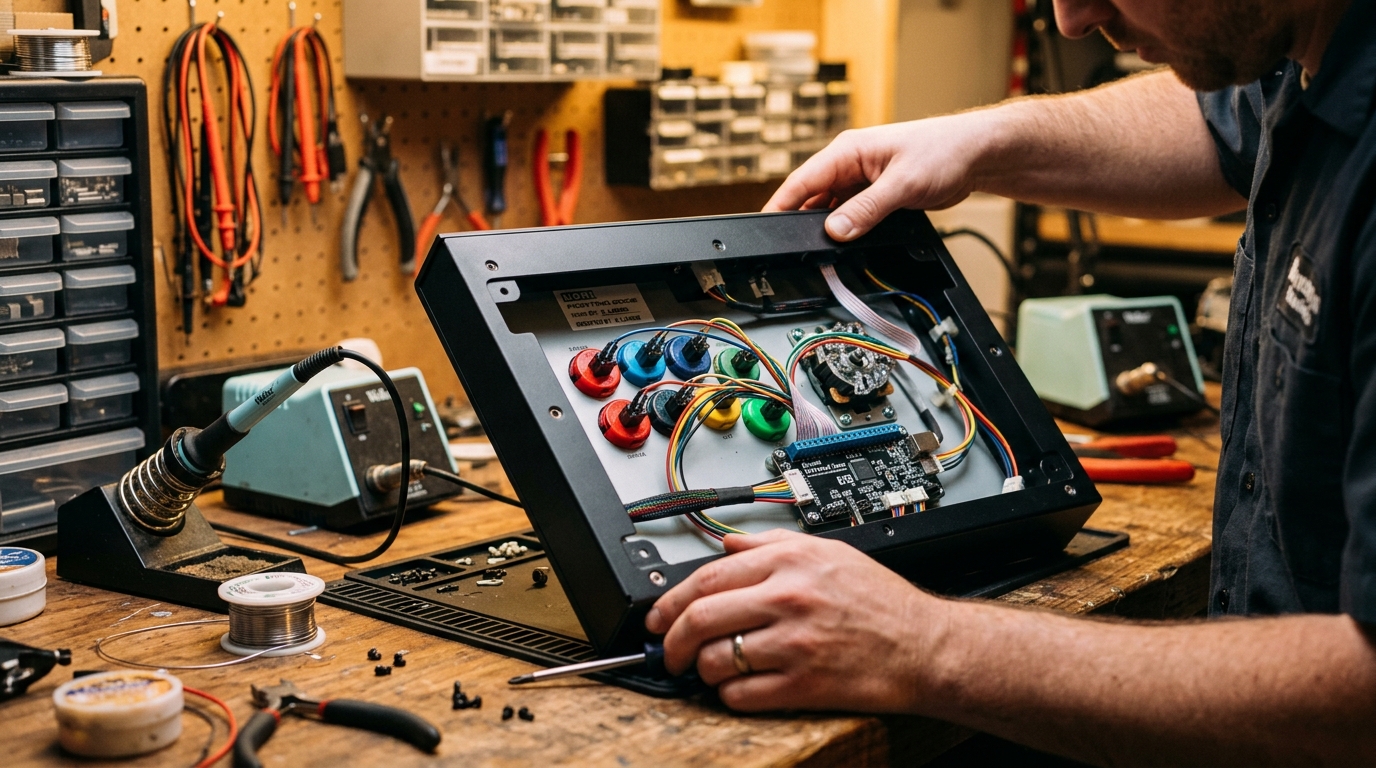
The real strength of an arcade stick is its modularity. Modding internal components offers concrete advantages that no stock controller can provide:
- Dead zone elimination: Replacing the lever’s actuator reduces the empty travel distance the joystick needs to cover before the game registers an input.
- Frame savings: Custom buttons actuate faster than stock ones, giving you blocks and attacks that register crucial milliseconds sooner.
- Cost-effective maintenance: If a button wears out after months of tournament play, you swap the individual microswitch for a few euros — no need to replace the whole device.
- Button ergonomics: Modders can swap button caps to change the material (textured or satin anti-sweat surfaces) or shape (domed or flat for double-tap inputs). Adding foam dampening rings (silencer) cuts down on noise and shortens the button travel.
Japanese Lever vs Korean Lever
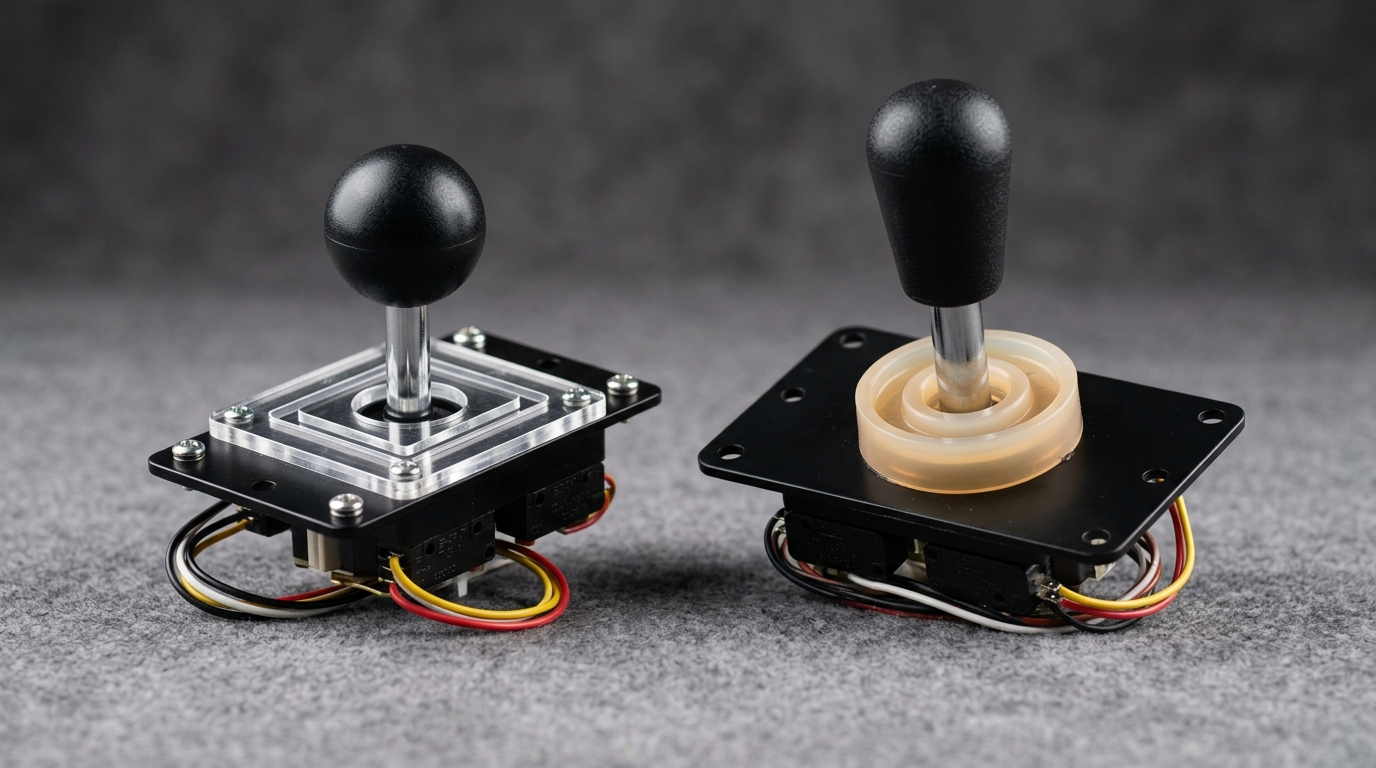
Your choice of lever defines your playstyle. Japanese levers are the global standard for commercial sticks. Resistance is handled by an internal metal spring, and movement is constrained by a plastic guide at the base (Restrictor Gate), usually square or octagonal. It’s a geometric solution that works particularly well for 2D games like Street Fighter 6. Modders often replace the stock spring (1 lb) with stiffer ones (2 or 4 lbs) to prevent the lever from overshooting center when released sharply.
The Korean lever, born in Seoul arcades, is considered the definitive choice for Tekken. It uses no spring: instead, resistance comes from a cylindrical silicone insert (grommet). The harder you push, the more it pushes back, delivering a lightning-fast return to neutral. Korean levers also have no internal guide at all (gateless). That elastic feel is ideal for the fast back-and-forth inputs the game demands
The Leverless: Digital Revolution or “CheatBox”?
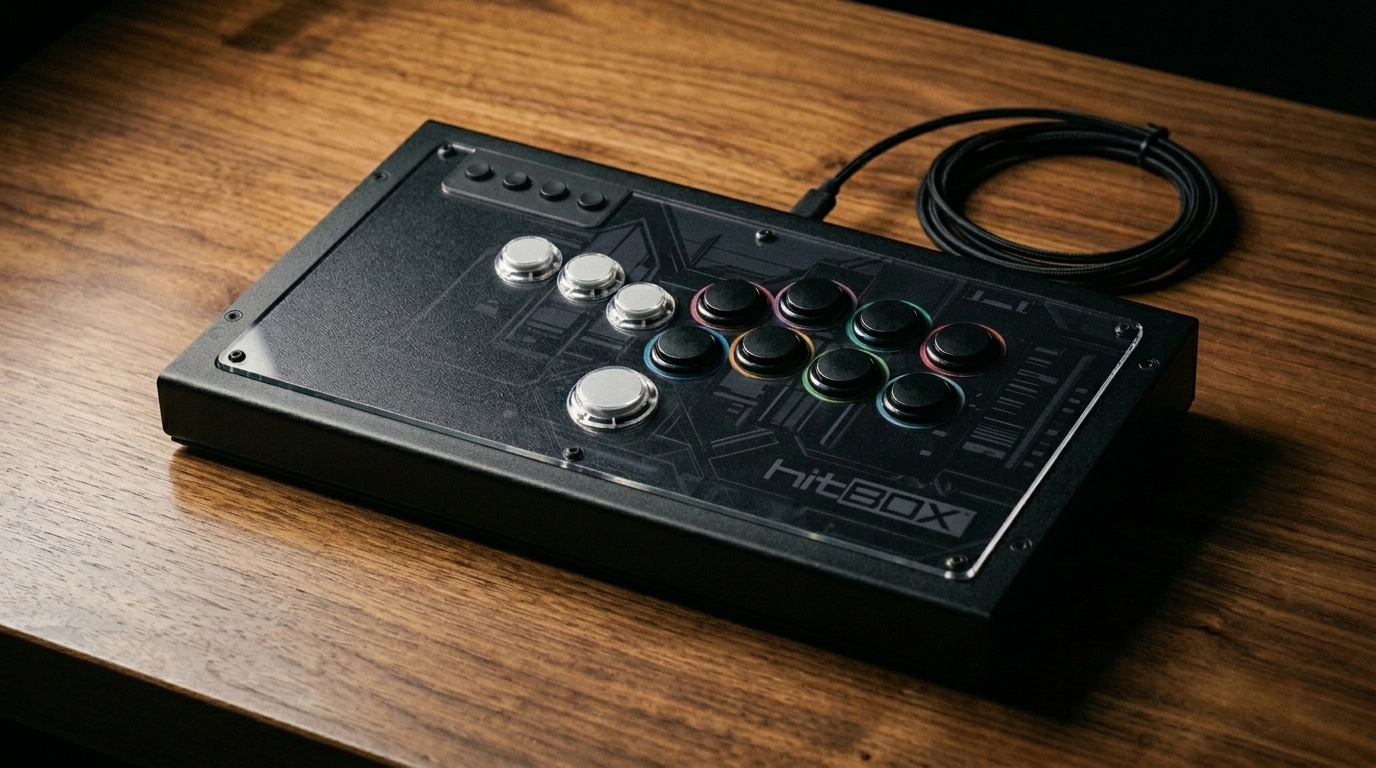
Leverless systems (widely known by the name of the pioneering brand, Hitbox) are the present of competitive gaming — and probably its future too. This device replaces the analog lever with four directional buttons. The jump button sits at the bottom, operated by the thumb, distributing movement inputs across individual fingers.
Handing movement to your fingers instead of your wrist changes everything. On a joystick, going from Forward to Back means the lever has to travel through the center. On a leverless, that transition time disappears entirely: direction changes are instantaneous.
Handling Opposite Inputs (SOCD) and the “CheatBox” Myth
Removing the physical constraint opened up serious debates about input fairness. Pressing opposite directions simultaneously with a lever is physically impossible — with buttons, it’s trivial.
Early firmware handled this with an “absolute” priority system, giving precedence to the last input or specific directions. In 2D fighters, for example, pressing Down + Up simultaneously would output Up, letting players go from block to jump instantly. That advantage is what earned these controllers the “CheatBox” nickname.
To ensure fairness, official tournament rulesets now require the use of a standardized SOCD Cleaner profile (Simultaneous Opposite Cardinal Direction). This system neutralizes simultaneous opposite inputs — turning Right + Left into Neutral). Despite this restriction, human error caused by wrist fatigue is eliminated entirely, resulting in more consistent blocks and counterattacks.
Keyboards and MixBox: The Digital Alternatives
Often overlooked, the PC keyboard is the ancestor of leverless systems. Anyone playing Tekken 8 on PC already has a viable competitive input device, thanks to a button layout that mirrors the Hitbox philosophy.
The keyboard does have clear ergonomic limitations, though. In the standard WASD layout, the middle finger has to constantly shift between W (Up) and S (Down), creating a bottleneck on fast movement. On an Hitbox that problem doesn’t exist: each finger stays in a fixed position. To work around it, many PC players remap jump to the spacebar.
The Tournament Ban and the Birth of the MixBox
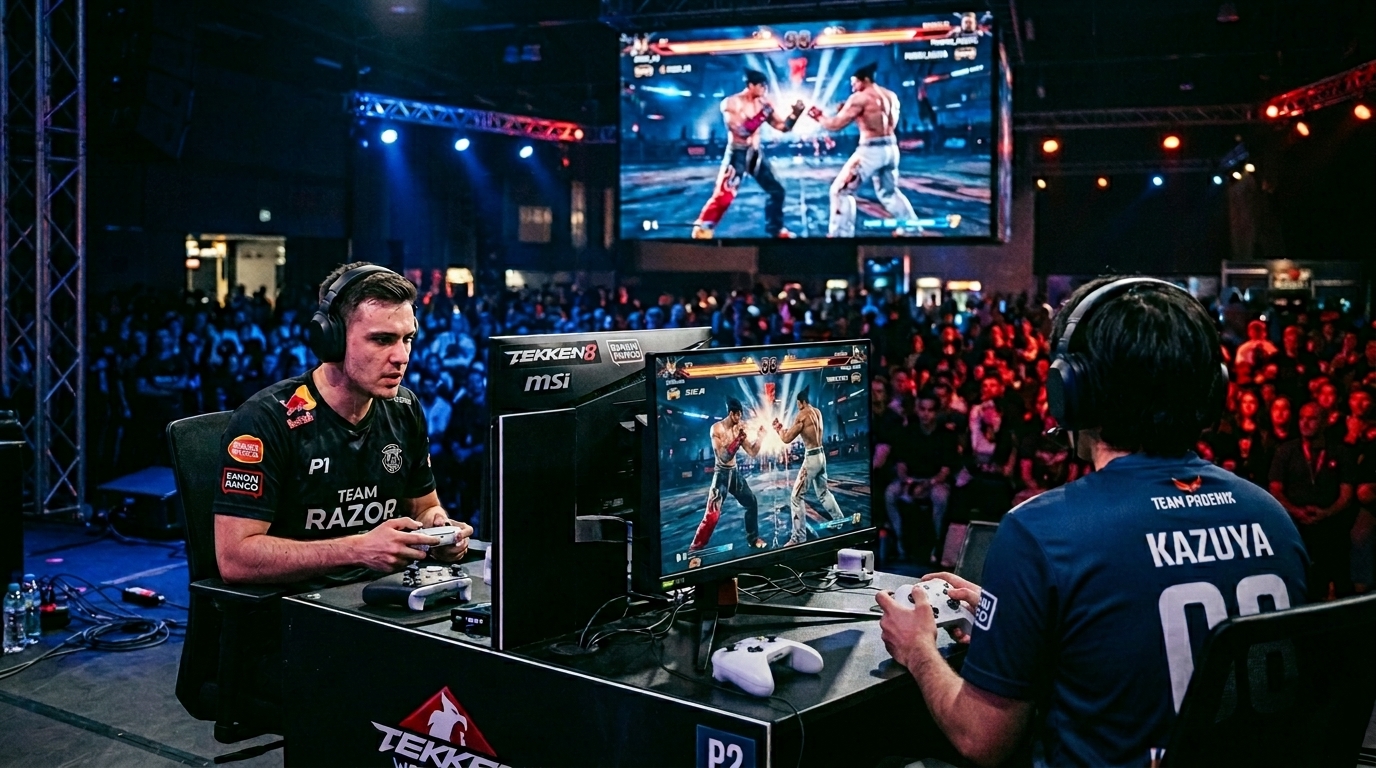
In official competitions (such as the Tekken World Tour and EVO), keyboards are banned for fairness reasons. Many modern models allow complex macros to be saved directly to internal hardware memory, and referees have no way to verify their absence on-site. Leverless systems, by contrast, are legal because they use certified PCBs that emulate a standard controller.
To let keyboard players compete legally, in 2018 in Hong Kong MixBox Arcade was founded. The brand created a hybrid by replacing the lever with a raised WASD mechanical keyboard section, built on certified PCBs. Over the years the market has expanded further with Asian brands like FightBox Arcade, known for strong value for money, and Haute42, a company that democratized the segment with affordable, highly customizable models.
Which Controller Should You Choose?
There’s no right answer. The pad is the most accessible entry point, the stick carries the nostalgia of the arcade, and the leverless is the choice for anyone who wants to optimize every millisecond. In the end the decision is yours, down to your fingers.