
Tekken 8 Okizeme Guide: How to Destroy Opponents on Wake Up

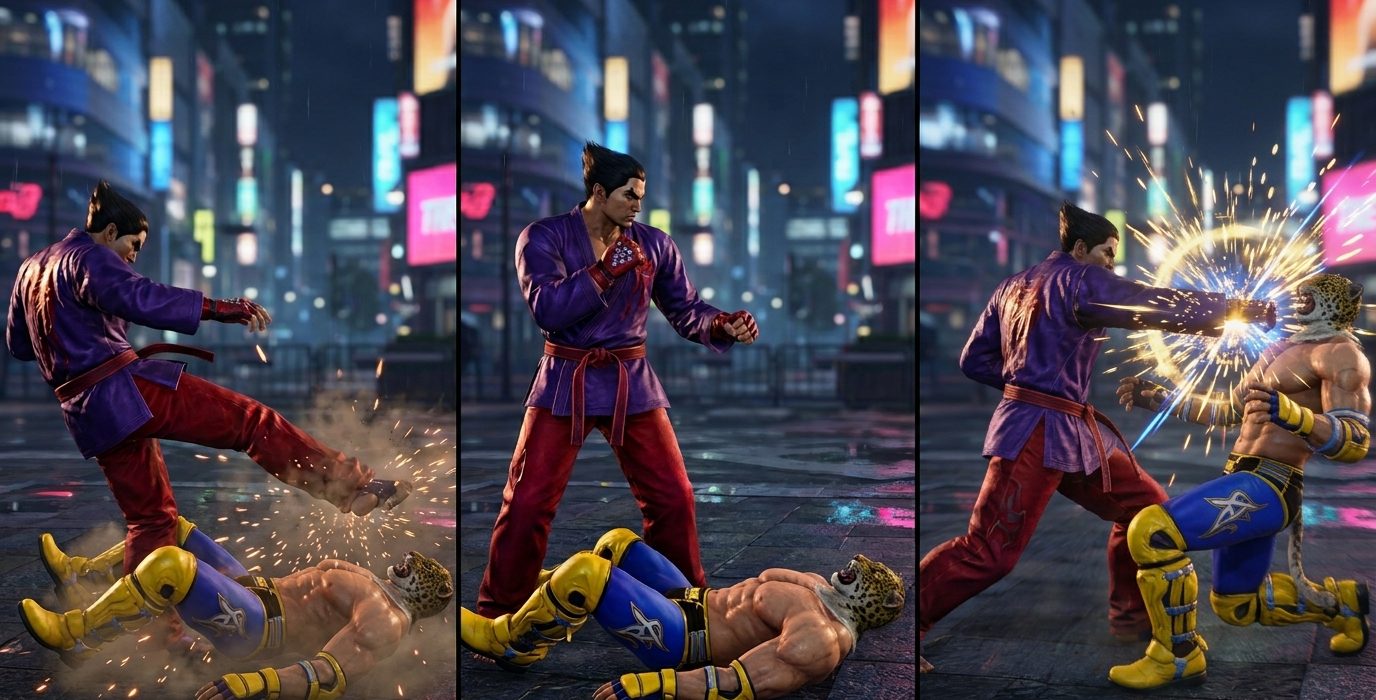
Okizeme: Watch out, it’s slippery!
okiru (to get up) + semeru (to attack), from which we get Okizeme, often shortened to Oki
So what is Okizeme?
In short, Okizeme is the art of keeping pressure on a grounded opponent.
It’s not just an extra hit. If you have no plan for Oki, you’re leaving advantage on the table you’ve earned. In Tekken 8, every time you knock someone down, a critical window opens. Ignoring it means leaving the job half-done and letting your opponent get back up for free.
In 2D games, l’Oki si basa su frame trapping and Strike/Throw mix-ups; the nature of the knockdown constrains timing and space, limiting the defender’s choices to getting up in place or using a Backroll to recover distance.
In Tekken 8, the difference is structural: everything revolves around the Techroll (Ukemi), the only truly safe option. In a Soft Knockdown, the defender can recover immediately with invulnerability.
In a Hard Knockdown, this option disappears: every choice becomes readable and punishable.
In Tekken 8, Soft and Hard Knockdown do not merely affect timing and space: they define the entire Okizeme system.
Soft Knockdown
Occurs when the opponent not is not slammed violently to the ground. In this state, only a limited set of quick-recovery techniques are available, but the strongest option is the Techroll (Ukemi), the only move with an intrinsic semi-invulnerability. This option allows for a fast recovery, neutralizing most of the immediate pressure and limiting the attacker’s follow-up options.
There is also an offensive option, activated by holding F (Forward) at the moment of impact. The character springs up immediately, diving forward. It is a specific tool to punish opponents who use slow moves or jump attacks (orbitals, running moves) during Okizeme.
If the dive connects, it is the defender who interrupts the attacker, often gaining the chance to start their own damage sequence. However, it is a total gamble: it has no invulnerability whatsoever. If the attacker anticipates it, the animation is interrupted instantly. In that case, the defender gets floated (hit airborne), handing the opponent a free and devastating combo.
Hard Knockdown:
No Techroll, no recovery options from Soft Knockdown. Occurs when the opponent is knocked down with no immediate recovery available (for example after throws or specific moves).
In this state, Techroll is off the table: no invulnerability, no safe options.
Every get-up attempt is readable and punishable.
This is where Okizeme becomes a true forced-pressure situation.
You also have to consider what position you land in. Tekken also makes use of l’orientamento del corpo relative to the opponent, and this is where one of the most important aspects of the game comes into play:
grounded body position.
Your orientation relative to the opponent determines which defensive options remain available.
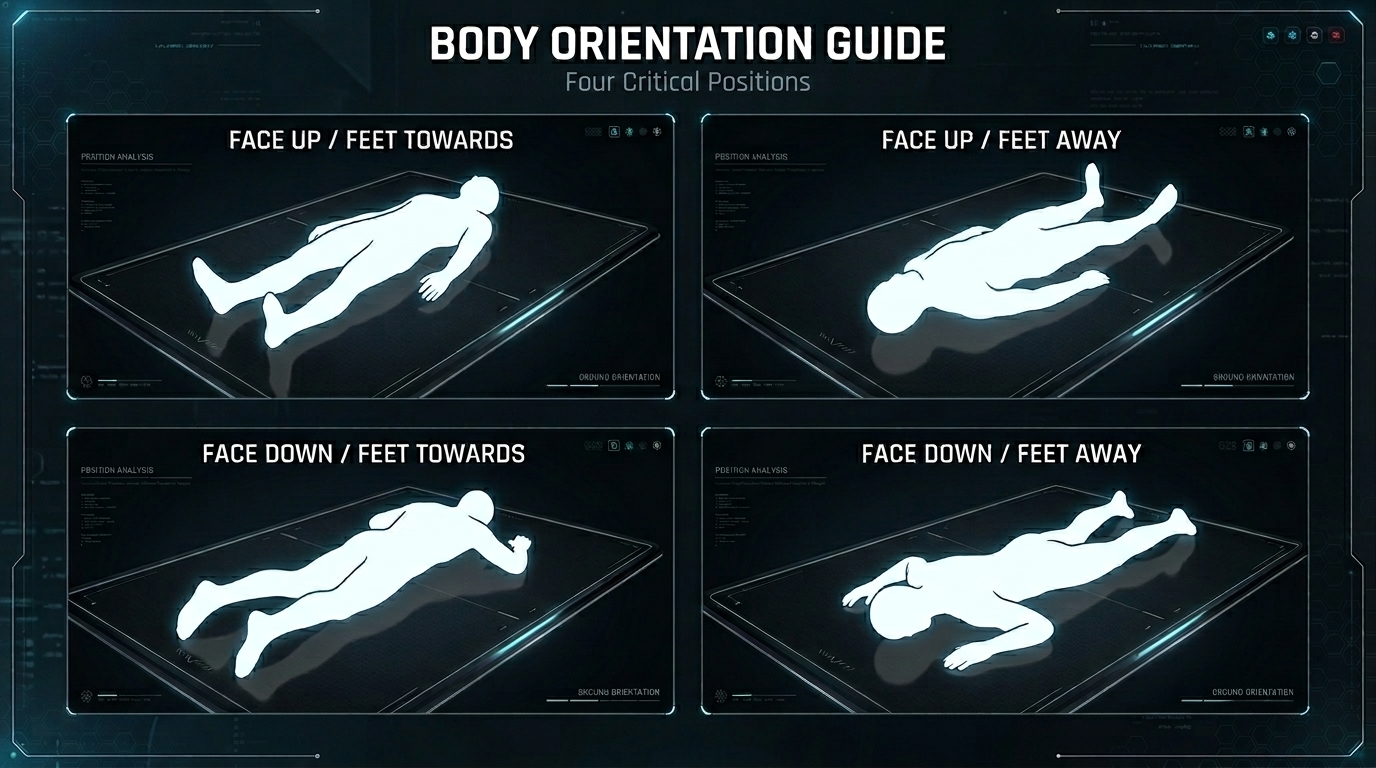
1. Face Up, Feet Towards (FUFT).
This is the standard and least vulnerable position. The defender has access to all main counters:
- Get-up Kicks (3 or 4): Low or mid kick to interrupt the attacker’s advance. If it whiffs, you risk being launched.
- Spring Kick (3+4): An offensive leap that can hop over lows, but is extremely punishable on block.
- Toe Kick (d+3): A quick kick to the opponent’s feet that creates space and allows a backward roll on hit.
- Standard get-up (U or B): Allows you to block almost immediately.
2. Face Up, Feet Away (FUFA)
A high-danger position that drastically limits options:
- Reduced offensive options: Spring Kick is unavailable.
- Vulnerability on back get-up (B): Attempting to get up backwards is dangerous; the character must turn during the animation, leaving the back exposed for several frames, risking a full combo.
- Slow recovery: Stand-up animations are generally slower
3. Face Down, Feet Towards (FDFT)
Often results from guard-breaking hits or specific throws:
- Limited options: Similar to FUFA, exposes the back if you attempt a quick backward get-up (B).
- Ground kicks: Get-up kicks are available but have different properties and frame data, often less effective at pushing the attacker away.
4. Face Down, Feet Away (FDFA)
The most critical state of all (common after being spiked):
- No immediate counters: Spring Kick and effective kicks are unavailable.
- Total vulnerability: The defender is forced to absorb the pressure or attempt Siderolls to change state, since a direct get-up is slow and punishable.
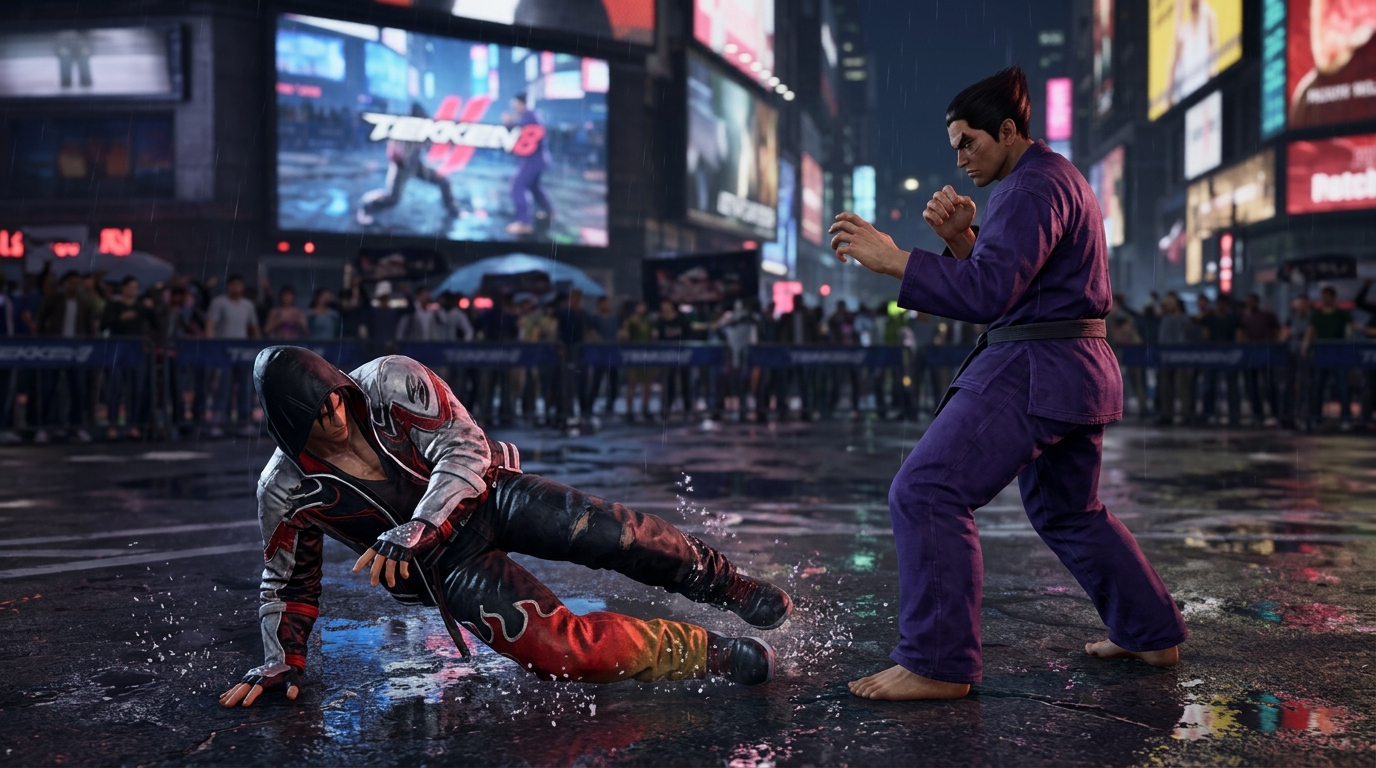
You can perform a single Sideroll to escape critical situations, such as wall pressure. It is an excellent defensive option: by staying low, you avoid most high and mid attacks. However, if the attacker waits for the animation to end, they can hit with a grounded attack. In short, the Sideroll does not cancel the danger, it only delays it. Also, during Hard Knockdown, if any attack touches the defender, there is a brief window where Techroll becomes available!
Sometimes, doing nothing is the right call
The option of simply staying on the ground and getting up at the right moment is often underestimated, and this is one of the most common mistakes, driven by fear of guaranteed lows.
Techroll does give you a safe way up, but once you’re on your feet you’re forced to choose a guard direction, and at the wall especially, l’okizeme diventa letale.
Most mid attacks cause a wall splat, handing the opponent a huge reward, while lows keep the pressure going.
Okizeme works this way, ma some characters can exploit it in very specific ways, such as Yoshimitsu
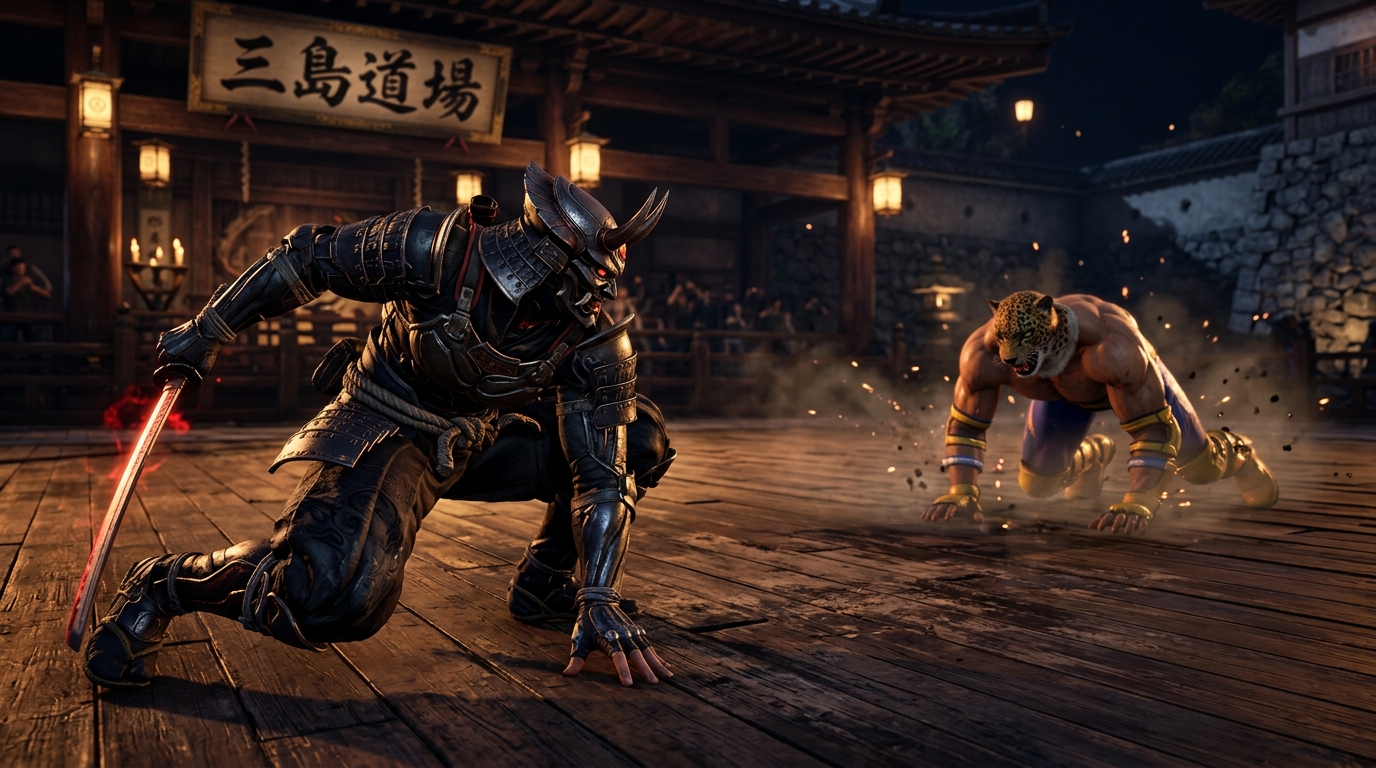
Yoshimitsu, thanks to his Samurai Cutter, an unblockable low, can act directly against the opponent’s Techroll.
In a standard situation, the logic is: “I’ll Techroll and then choose how to guard”. Against Yoshimitsu, the reasoning behind it changes: “If I Techroll, I undergo the unblockable low. If I stay down, I could be hit by lows”. In this scenario, the Techroll’s invulnerability is nullified by the unblockable nature of the attack, turning the grounded state into a psychological maze with no safe exit.
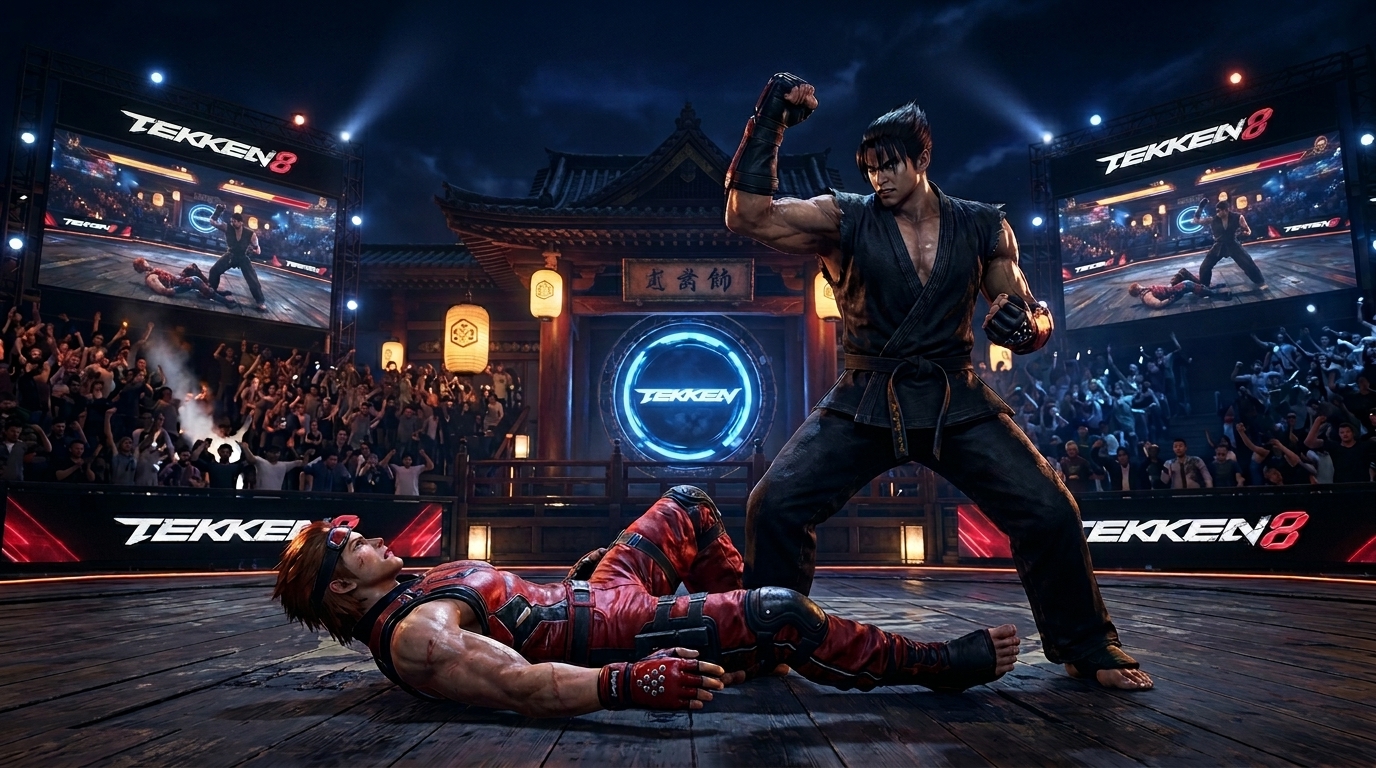
How to apply Okizeme in a match
Okizeme in Tekken is not just about dealing damage, it’s about maintaining the advantage. It does not aim to guarantee damage, but to maintain control of the situation by forcing your opponent into risky decisions
Timing management
There is no single correct way to apply pressure:
- Immediate Oki: hit immediately, loses to Techroll and fast options
- Delayed Oki: delay, punishes Techroll and automatic get-ups
- Bait: do nothing, can bait get-up kicks and spring kicks
Mixing up these timings is what creates true Okizeme.
In Tekken 8, the winner is not the one who lands the longest combo, it’s the one who knows what to do when the combo ends. Okizeme is the moment you stop playing against a character and start playing against the mind of your opponent.